Nearby
The Hong Kong issue
Central, Hong Kong: glass towers, steep lanes and the city at full volume
Hong Kong’s most concentrated square mile pairs harbour views and heritage prisons with world-ranked bars, Michelin rooms and the city’s sharpest vertical walk.
By Carmen HoHong Kong, from the ground up
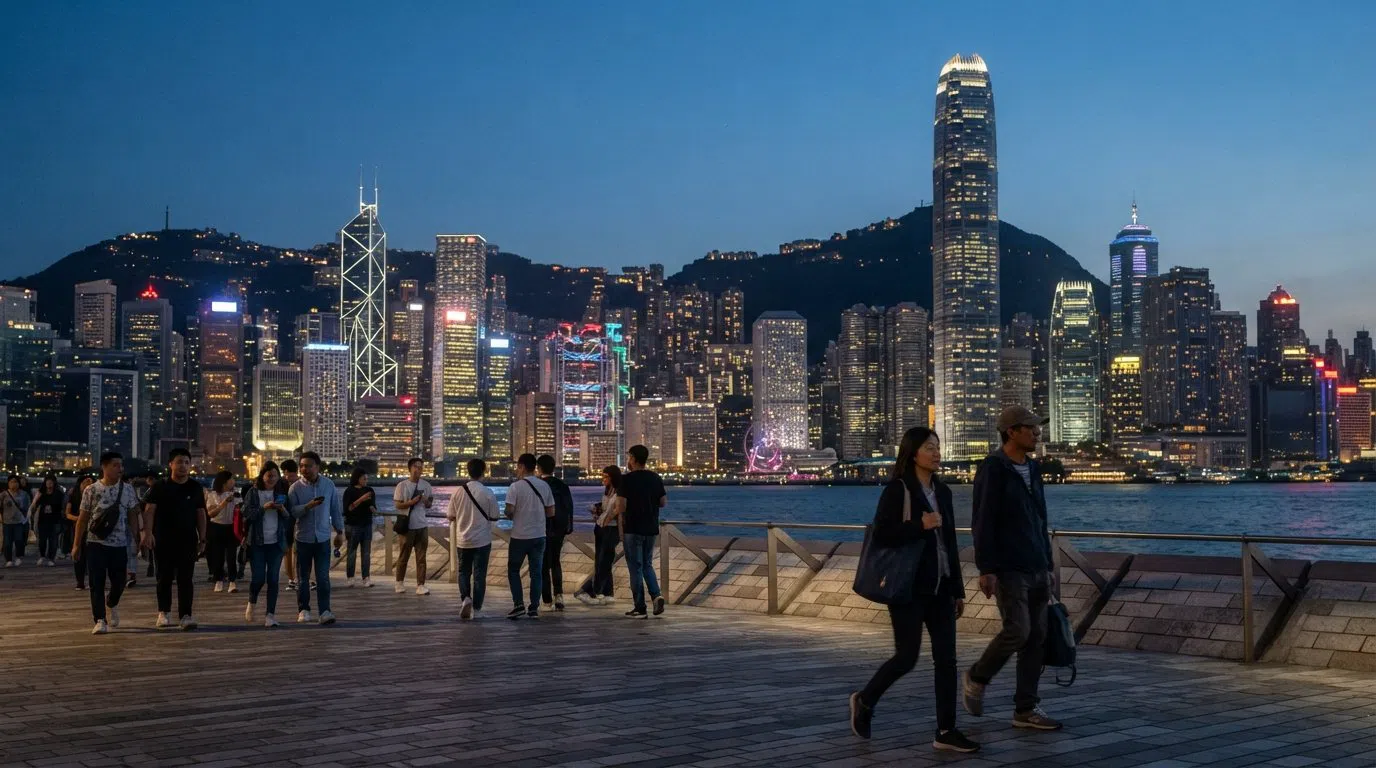
Central is the piece of Hong Kong that fits the postcard: a wall of glass banking towers pressed against the harbour, then steep lanes climbing behind it into Soho’s bars and Michelin dining rooms. It runs at two speeds — suited and relentless by day, loud and drink-in-hand by night — and both are worth your time.
What Central is known for
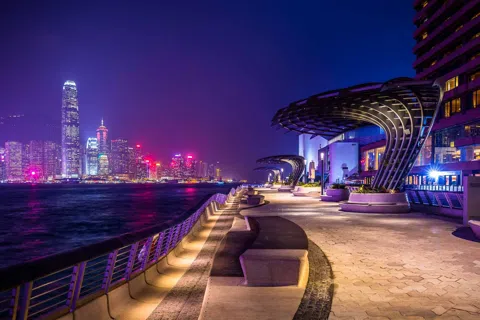
Central is Hong Kong’s financial engine and its showcase district in one. If you come in from the Kowloon side and look across the water at night, the towers you are really seeing are here, standing behind the nightly Symphony of Lights like a bank of lit circuitry. On the ground, that money shows up in the obvious ways: luxury malls, five-star hotels, polished office lobbies, and a dining scene that can still make hardened travellers stop and stare at the bill before the first bite.
The district’s shape matters. It is fast and vertical, and the pavements between about 8am and 7pm move like a river of banking suits, delivery trolleys and camera-toting visitors funnelled between the MTR, the malls and the office towers. Above them, the air-conditioned footbridge network lets you cross half the district without touching ground. It is one of the great Hong Kong tricks: a city that is always making you earn your view, then rewarding you with one.
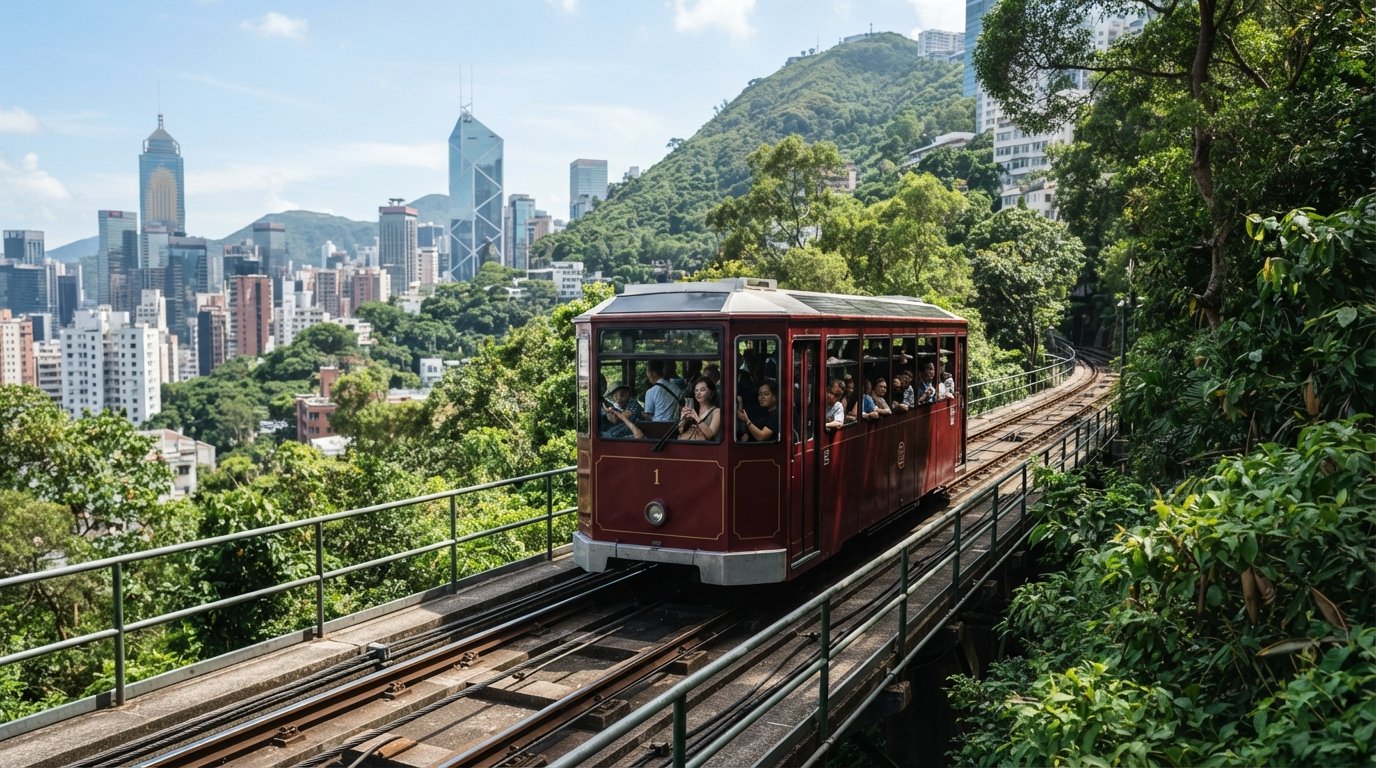
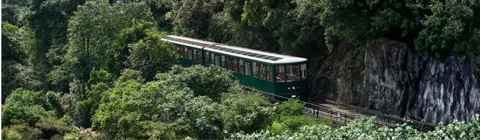
The two magnets most people feel first are the Peak Tram and the Central–Mid-Levels Escalator. The Peak Tram has climbed from Garden Road since 1888, and the ride itself still feels like a small civic event: a funicular tugging you uphill to Victoria Peak, where the skyline opens and the harbour sits below in layers. The Central–Mid-Levels Escalator is the other essential machine here, the longest outdoor covered escalator system in the world, and it is not just a tourist novelty. It is how Soho breathes. It carries office workers, diners and drinkers uphill through the district’s steepest streets, and it makes Central legible in a way maps never quite do.
Then there is the heritage layer, which gives Central its bite. Tai Kwun, the former Central Police Station compound, sits in the middle of all this glass and cash like a reminder that the city has always been more than its balance sheets. Central Market, the Bauhaus-era market building, reopened in 2021 after nearly two decades shut and now pulls in small food vendors, cafes and pop-ups. Duck off Queen’s Road Central and the district stops behaving like a finance brochure. You hit noodle stalls, old counters, and a neighbourhood that still knows how to be rough around the edges.
Plan your Hong Kong trip
Live prices from our booking partners.
Guests & rooms
Free cancellation on many rooms. We may earn a commission when you book.
Where to eat & drink
Central holds the densest run of fine dining in the city, and it does not apologise for it. At the top end, the Four Seasons on Finance Street houses two three-Michelin-star rooms: Caprice, the grand French restaurant with harbour views, and Lung King Heen, the Cantonese kitchen famous for its dim sum. This is the kind of dining that makes you slow down even before the first course arrives. Caprice is all polish and water-facing calm; Lung King Heen is the place you go when you want to remember how exact Cantonese cooking can be when it is given the room and the confidence to breathe.
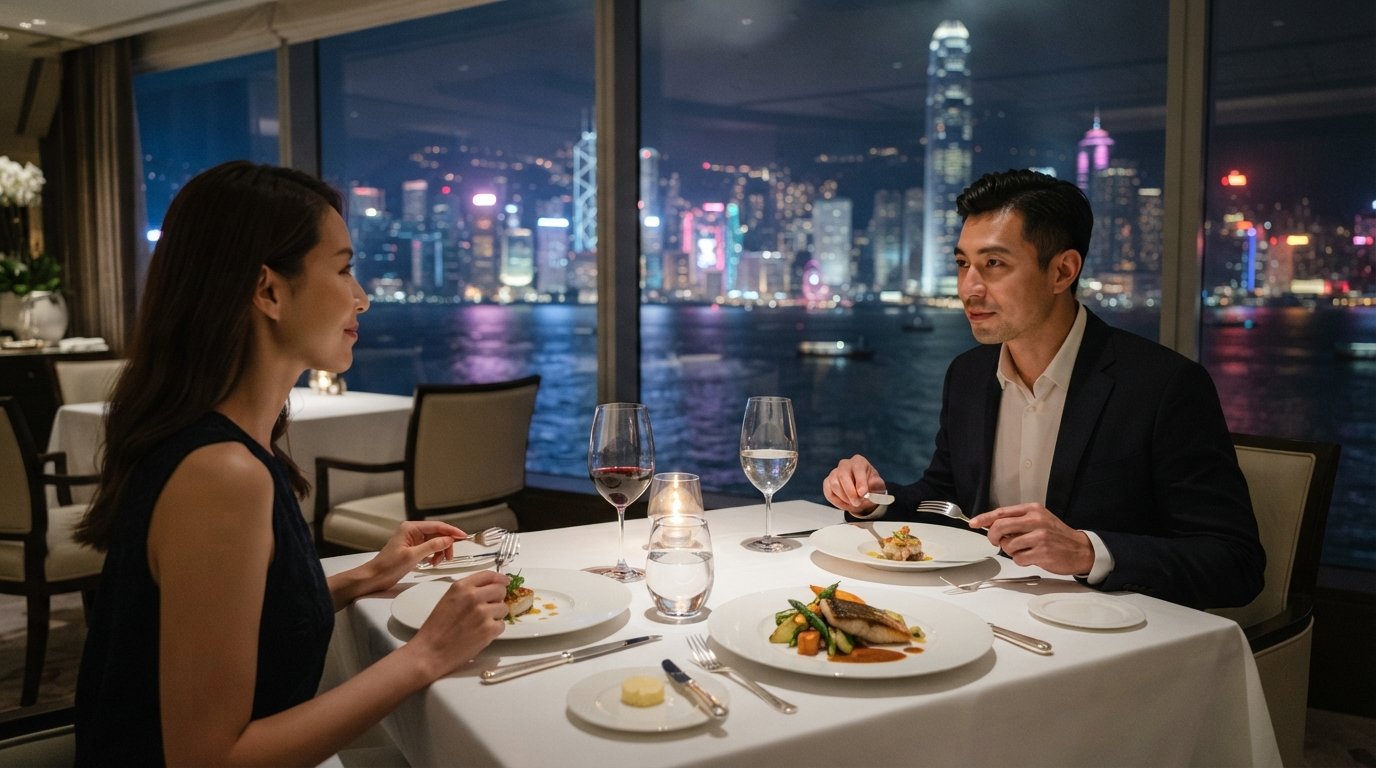
Over at Mandarin Oriental’s Landmark hotel, Sushi Shikon holds three stars for its edomae omakase. Nearby, WING on Wellington Street is chef Vicky Cheng’s modern Chinese-French tasting menu, ambitious without feeling showy, while Ando works Spanish technique against Japanese ingredients. Duddell’s on Duddell Street gives the neighbourhood a different sort of grandeur: Michelin-starred Cantonese with a weekend dim sum brunch that has become a fixture for people who like their lunch with a little ceremony.
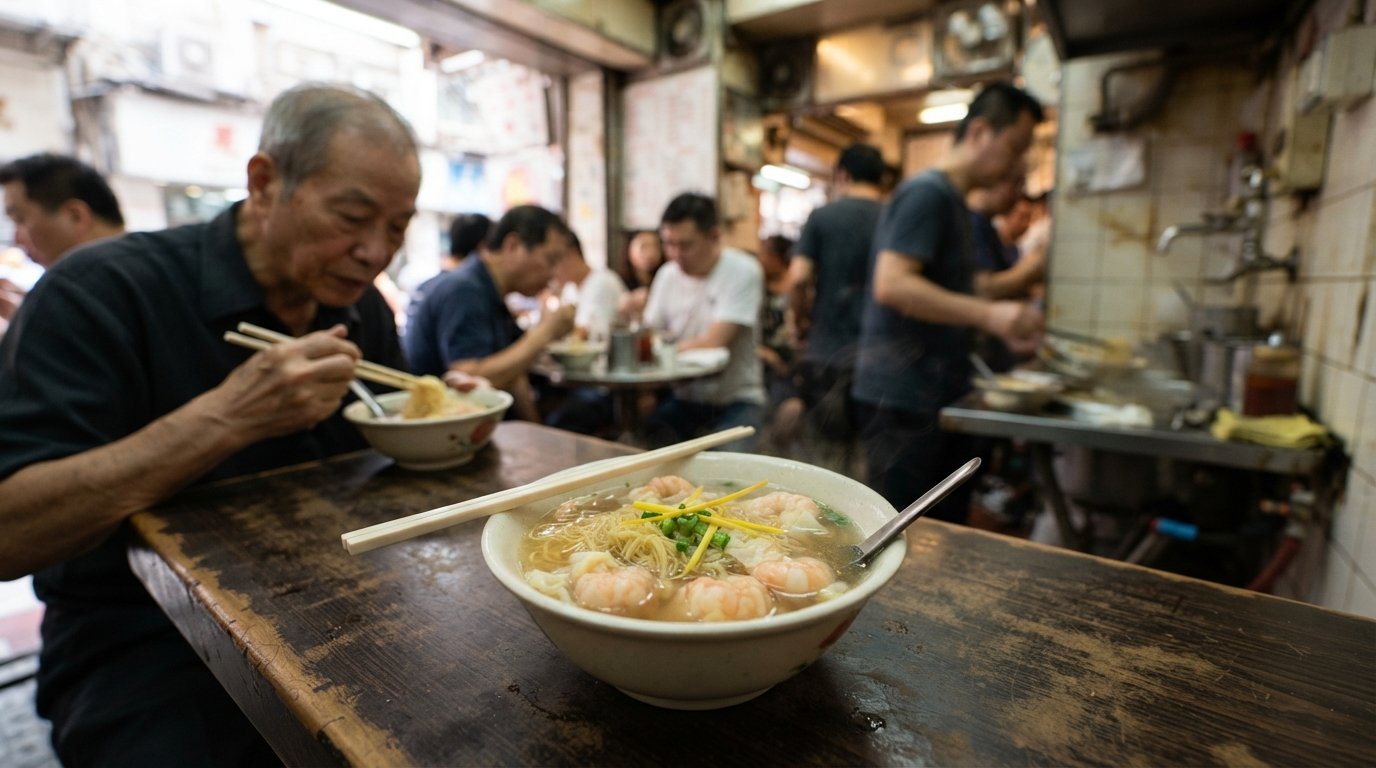
But Central is not only for tasting menus and hotel polish. Some of its best meals are the sort you eat standing up, or while the lunch crowd hurries past. Mak’s Noodle on Wellington Street serves delicate wonton bowls that still matter because they are precise and unshowy. Lan Fong Yuen pours the silky “pantyhose” milk tea it helped invent, and if that sounds like marketing fluff, it isn’t — the tea is the point, strong and smooth and better than most people remember. Sing Heung Yuen is loved for its tomato-broth macaroni, a proper old-Hong-Kong lunch that tastes like the city refusing to become a museum.
Ho Lee Fook, down the steps on Elgin Street in Soho, is where you go when you want dinner to feel loud and alive. It is contemporary Cantonese, fun and a bit swaggering, and the char siu is the order that keeps its reputation honest. Samsen on On Lan Street is another one worth crossing town for: Bib Gourmand Thai street food, with the wagyu boat-noodle soup as the signature. It is the kind of bowl that makes a lunch queue feel reasonable.
For drinks, Central is genuinely world-class. Bar Leone on Bridges Street became The World’s Best Bar in October 2025, and it does exactly what the best bars should do: make the room feel easy, the service sharp, the cocktails unfussy. Its Italian “cocktails for the people” idea is matched by mortadella sandwiches that have become nearly as talked about as the drinks. COA on Shin Hing Street keeps one of the region’s biggest agave collections and has stayed on the global 50 Best Bars list long enough to prove it is no fluke. Penicillin on Hollywood Road is the city’s pioneering zero-waste, closed-loop cocktail bar, and Kinsman on Peel Street builds drinks around Cantonese and Chinese spirits in a room that feels lifted from a Wong Kar-wai frame.
Going out
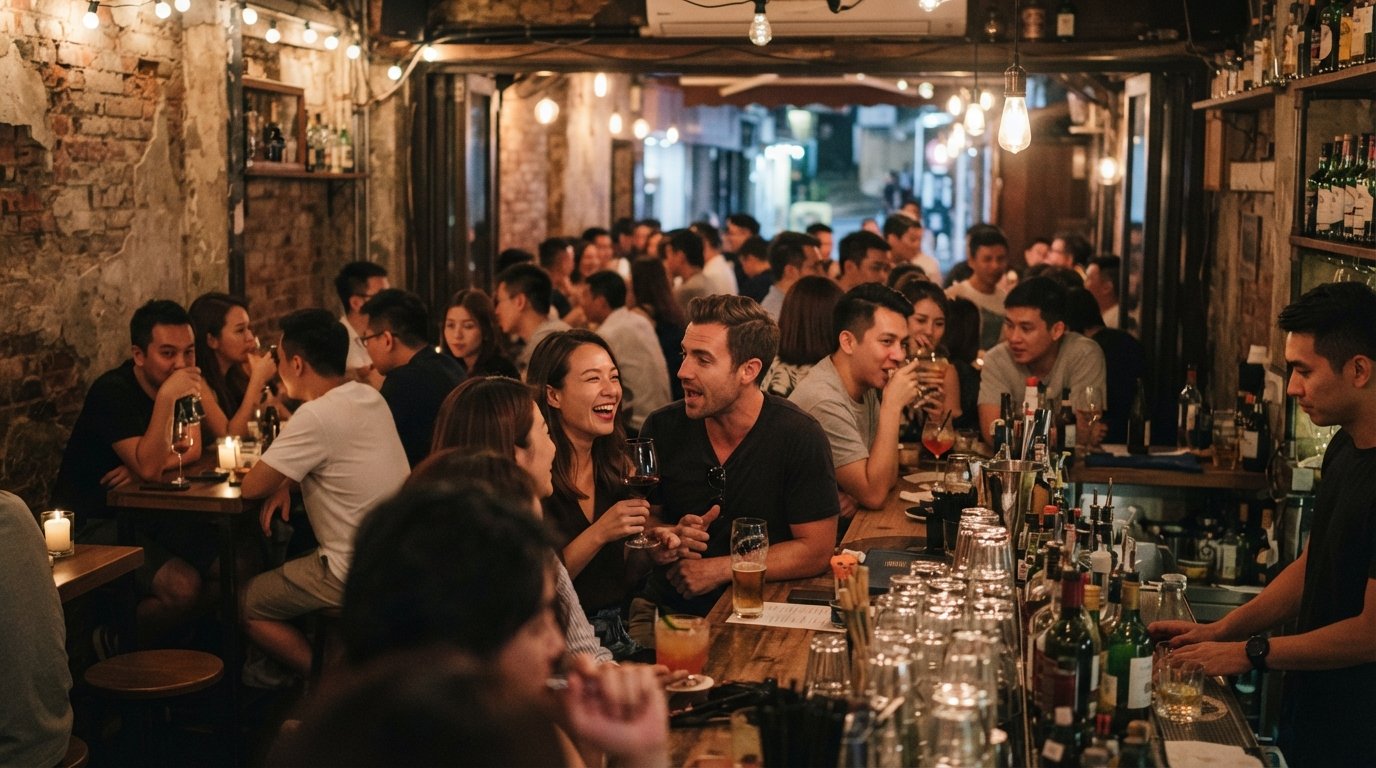
Central’s nightlife has two centres, and the difference between them is the difference between a shout and a conversation. Lan Kwai Fong — LKF, if you want to sound local — is the loud, party-first core. It is a small cobbled L of pedestrian streets packed with more than a hundred bars, pubs and clubs, and it is at its rowdiest late on Friday and Saturday, or whenever the city finds an excuse for a street party. This is not the place for quiet. It is the place for energy, crowds and the pleasant chaos of people who have already decided the night should not end early.
Uphill, Soho is where the serious bar scene lives. The streets around the Mid-Levels escalator — chiefly Elgin, Staunton, Peel and Bridges — tend to peak earlier in the evening than LKF does, which suits the drinking style here. Start at Bar Leone on Bridges Street, walk to COA on Shin Hing Street, then on to Penicillin on Hollywood Road. The geography is merciful: the good bars cluster close enough that you can drift between them without needing a plan, just an appetite.
Argo, in the Four Seasons down by the harbour, is the polished, view-driven option for a hotel-bar nightcap. If you want something more theatrical, The Iron Fairies on Pottinger Street is the one with ten thousand butterflies on the ceiling and late-night music, a fantastical ironsmith-themed bar that feels made for people who like their drinks with a bit of stagecraft. A sensible Central evening often goes like this: cocktails in Soho, then down to LKF if you want the volume turned up.
Things to do
Start with the two rides that define a Hong Kong visit. The Peak Tram climbs from its Garden Road terminus up to Victoria Peak, and the Sky Terrace 428 viewing deck gives you the layered skyline-and-harbour view that people come here to collect and keep. Go early or near closing if you can; the queues are less rude then. The Star Ferry is the other essential: a cheap, scenic ten-minute harbour crossing from Central Pier 7 to Tsim Sha Tsui that remains one of the best-value views in the city. Take it at dusk if you can. Hong Kong looks especially good when the light starts to flatten and the water turns metallic.
Between those two, the Central–Mid-Levels Escalator is worth riding just to watch Soho’s street life slide past. It is one of those rare pieces of urban infrastructure that is also a good time. You do not need a reason beyond the motion itself.
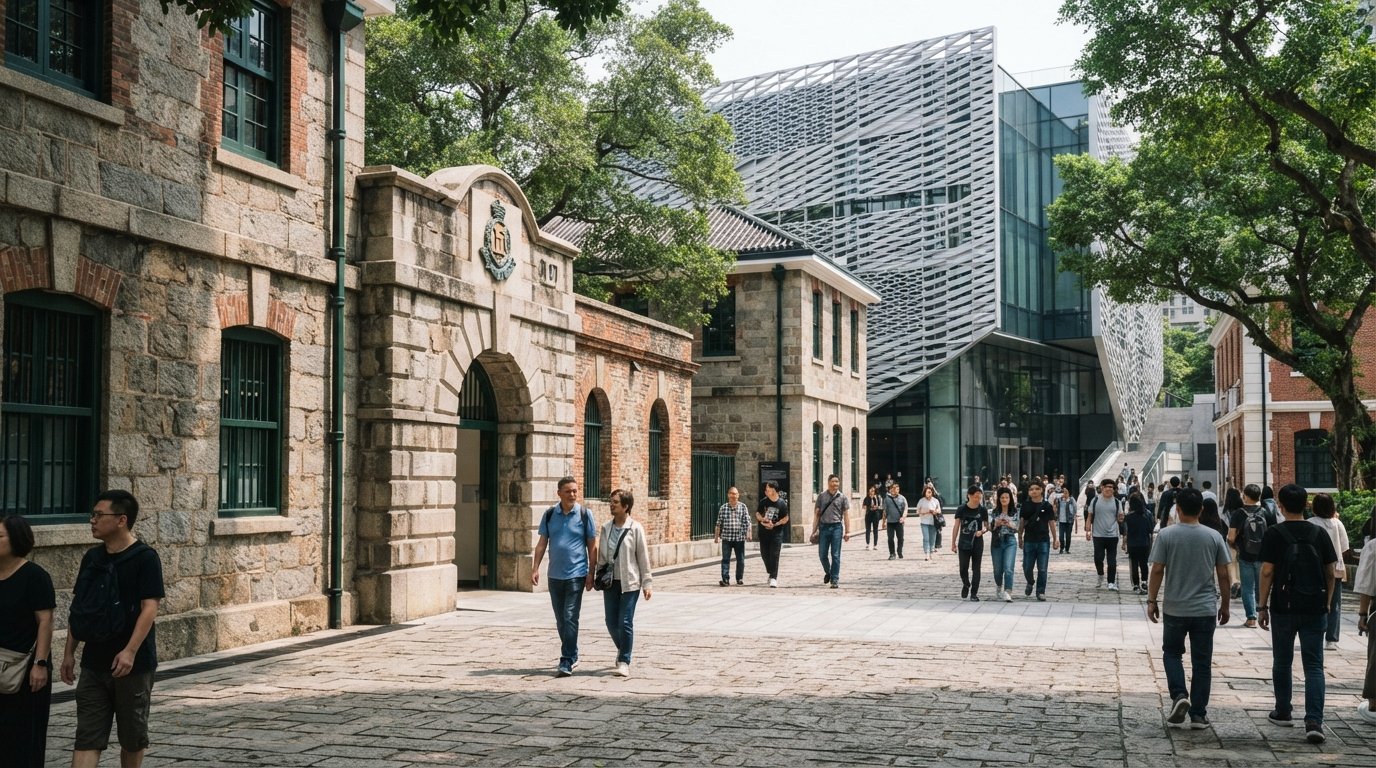
For culture, Tai Kwun is the standout. The former Central Police Station, Central Magistracy and Victoria Prison have been converted into a free-to-enter heritage-and-arts centre, with exhibitions in the old cell blocks, two courtyards and contemporary galleries in dramatic new blocks by Herzog & de Meuron. Free docent-led heritage walks run daily, and they are worth taking if you want the place to speak back. You feel the old authority in the walls, but the compound no longer behaves like a fortress. It behaves like a city room.
A short walk away, PMQ — the former Police Married Quarters — now houses local designers’ studios and shops. Central Market, restored in 2021 after nearly two decades shut, mixes small food vendors, cafes and pop-ups inside a preserved 1930s shell. Together they make an easy, walkable half-day that trades the malls for something with more grain, more history and a bit more surprise.
Don’t miss in Central
The Mid-Levels Escalator, the world's longest outdoor covered escalator system.
Tai Kwun, a restored colonial police station turned contemporary art and heritage center.
The Peak Tram terminal, providing access to the city's most famous viewpoint.
Shopping & markets
Central is the luxury-shopping heart of Hong Kong, and the big-name flagships are unusually easy to weave between because the malls all connect by footbridge. Landmark is the marquee address, a set of four linked buildings around a central atrium, home to the likes of Louis Vuitton, Balenciaga and Valentino alongside Michelin-starred dining. IFC mall, out by the harbour and directly linked to the Airport Express, mixes global luxury brands with more accessible fashion, a strong food hall and a rooftop terrace. If you want to brand-hop without fighting traffic or weather, this is your patch.
For something more local and creative, skip the malls and climb into Soho. PMQ stocks Hong Kong designers’ fashion, homeware and accessories across two heritage blocks, and Central Market is good for small independent food and lifestyle stalls. The lanes around Gough Street and Peel Street reward a slow wander, with concept stores, vintage sellers and design shops tucked between the restaurants. That contrast is the point: designer flagships on the flat, one-off local labels a short escalator ride uphill.
Where to stay in Central
Central is prime territory for luxury and business stays, and you pay for the postcode. Expect five-star towers and boutique heritage hotels rather than budget rooms. By the harbour, the Four Seasons — linked to IFC and the Airport Express — and the classic Mandarin Oriental deliver the big skyline-and-water views and the top-tier dining to match. Uphill toward Soho, the Landmark Mandarin Oriental sits above the Landmark mall for shoppers, while The Pottinger, a smaller heritage-styled hotel on Pottinger Street, puts you steps from the bars.
Pick your pocket by what you want. Near the harbour and the ferry piers is best for views, the airport link and quieter nights. Up around Soho and Lan Kwai Fong puts the dining and drinking on your doorstep but comes with weekend noise — if you are a light sleeper, ask for a room away from the street. Central is not a place for bargain hunting. It is a place for being where the action already is.
Hotels in Central
Our best-rated stays in this neighbourhood. Prices are approximate “from” rates — confirmed at the provider when you continue. We may earn a commission if you book through our partners — at no extra cost to you.
Nearby
Nearby
Nearby
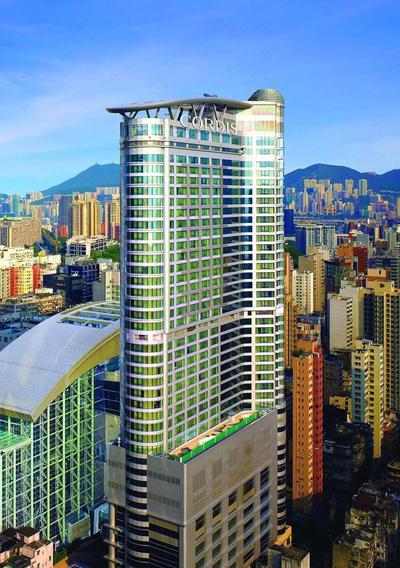
Hong Kong
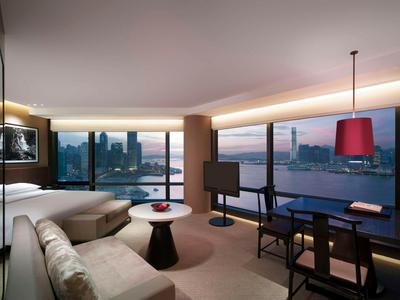
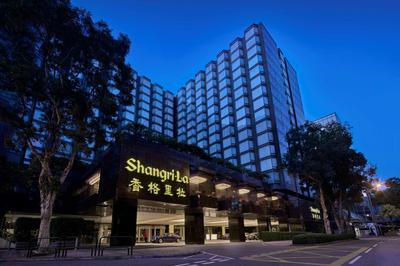
Cordis, Hong Kong - Langham Hospitality Group
8.9· 5,509 reviews
approx. from£387 / nightSee prices
Nearby
Nearby
Nearby
Nearby
Getting around
Central is compact and made for walking, helped by an extensive elevated footbridge network that keeps you off the traffic and out of the sun. Central station sits on the MTR Island and Tsuen Wan lines, and connects by a short walkway — three to six minutes, with moving walkways — to Hong Kong station, which serves the Tung Chung line and the Airport Express. That link puts Hong Kong International Airport roughly 24 minutes away, which is one of the fastest airport runs of any major city. Tap in and out with an Octopus card and you will be fine.
Above ground, the historic “ding ding” trams trundle east-west along the flat, the Star Ferry crosses to Kowloon from the Central piers, and the Central–Mid-Levels Escalator handles the steep climb up to Soho. It runs downhill in the morning rush and uphill the rest of the day. The one thing to respect here is the gradient: everything south of Queen’s Road Central is uphill, so save your walking for the flat and let the escalator do the climbing.
Gallery
Central in pictures
Central — your questions
Is Central a good area to stay in Hong Kong?
Yes, if your budget stretches to it. Central puts you next to the Peak Tram, the Star Ferry, top dining and the world-ranked bars, plus a fast Airport Express link. It is expensive, though, and short on budget rooms — nearby Sheung Wan or the Kowloon side usually give better value.
Is Central safe at night?
Very. Hong Kong has low violent-crime rates and Central stays busy and well-lit into the early hours. The only real caution is the ordinary big-city kind around Lan Kwai Fong late on weekend nights, when the streets get packed and drink-fuelled.
How do I get from Central to Victoria Peak?
Take the Peak Tram from its lower terminus at Garden Road. The funicular climbs to Victoria Peak in a few minutes, and you can add the Sky Terrace 428 viewing deck. Book online if you want to skip the ticket queue.
What is the easiest way to get around Central?
Walk when you can, use the footbridge network to avoid traffic, and let the Central–Mid-Levels Escalator do the hard climbing into Soho. Central station and Hong Kong station are linked by a short walkway, and the Airport Express makes the airport transfer very fast.