Nearby
The Hong Kong issue
Kennedy Town, Hong Kong: the city at the end of the line
At Hong Kong Island’s western tip, Kennedy Town trades big-sight drama for harbour sunsets, claypot rice, tram bells and a neighbourhood rhythm that still feels lived in.
By Carmen HoHong Kong, from the ground up
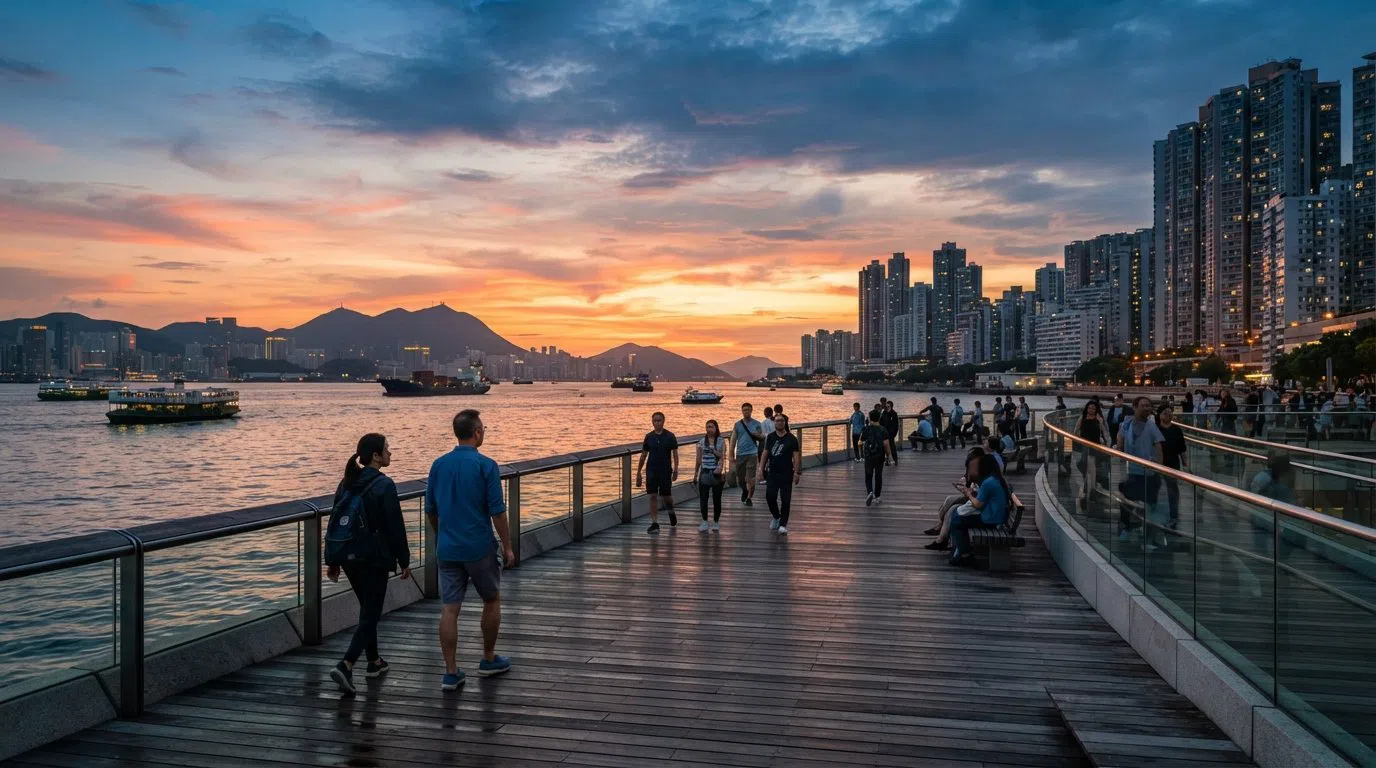
Ride the Island Line to its last stop and the city loosens its grip. In Kennedy Town, the tram bell stops ding-ding-ing, the harbour opens to the west, and people bring folding chairs down to the water to watch the sun drop behind Lantau. That is the neighbourhood’s first trick: it looks like an ending, but it behaves like a pause. You feel it in the narrow streets, in the way the old wet-market grain survives beside the new coffee bars, in the low hum that replaces the usual Hong Kong rush. K-Town, as everyone calls it, is not trying to dazzle you. It is trying to let you exhale.
What Kennedy Town is known for
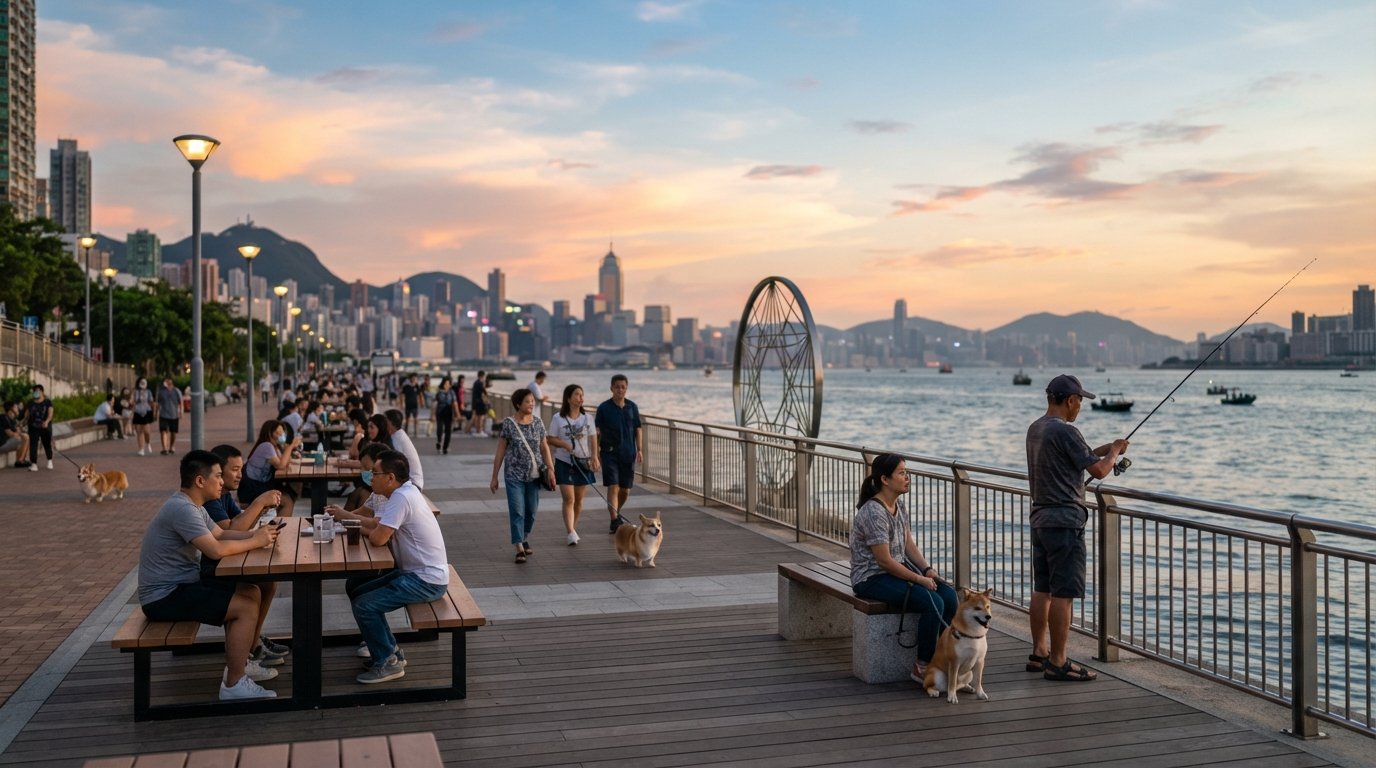
Two things define K-Town: the water and the food. It sits at the western terminus of both the Island Line and the historic double-decker tram, so it is literally the end of the line, and that dead-end geography is the point. The reclaimed shoreline, the praya, gives it something most of hyper-dense Hong Kong does not have — an open western horizon and unobstructed sunsets over Victoria Harbour toward Lantau Island. Locals treat the Belcher Bay Promenade, a boardwalk running along Shing Sai Road, as a communal front porch: dog park, picnic tables, fishermen, and a nightly crowd that shows up for the light.
The other reputation is culinary, and it is the one that keeps people coming back after the sunset has done its work. Since the MTR arrived in 2014, Kennedy Town has punched far above its size, holding Michelin Bib Gourmand recognition at places like Tak Kee and Yuan is Here, while chef-driven independents fill the low-rise streets. It is a neighbourhood you visit to eat and to slow down, not to sightsee — the appeal is the daily texture, not a monument. That matters. In a city that often sells itself in towers and views, K-Town sells itself in steam, smoke and queues.
Walk it and you notice the old part has not been bulldozed into anonymity. Grandmothers still queue at the bakery for pineapple buns while a barista three doors down pulls flat whites for tattooed twenty-somethings and their rescue dogs. The soundtrack is low: the clatter of a claypot kitchen, the double-decker tram grinding to its terminus, gulls over the praya. Streets are narrow and gridded, so you walk everywhere, and the crowd skews expat-and-creative without tipping into a party strip. The defining move is the golden-hour drift to the waterfront, drink in hand, everyone facing the same sunset.
Plan your Hong Kong trip
Live prices from our booking partners.
Guests & rooms
Free cancellation on many rooms. We may earn a commission when you book.
Where to eat & drink
K-Town’s food runs the full range on a few walkable streets, which is exactly how I like a neighbourhood to behave. You do not need a taxi to make dinner work. You need time, a bit of appetite and the good sense to arrive hungry.
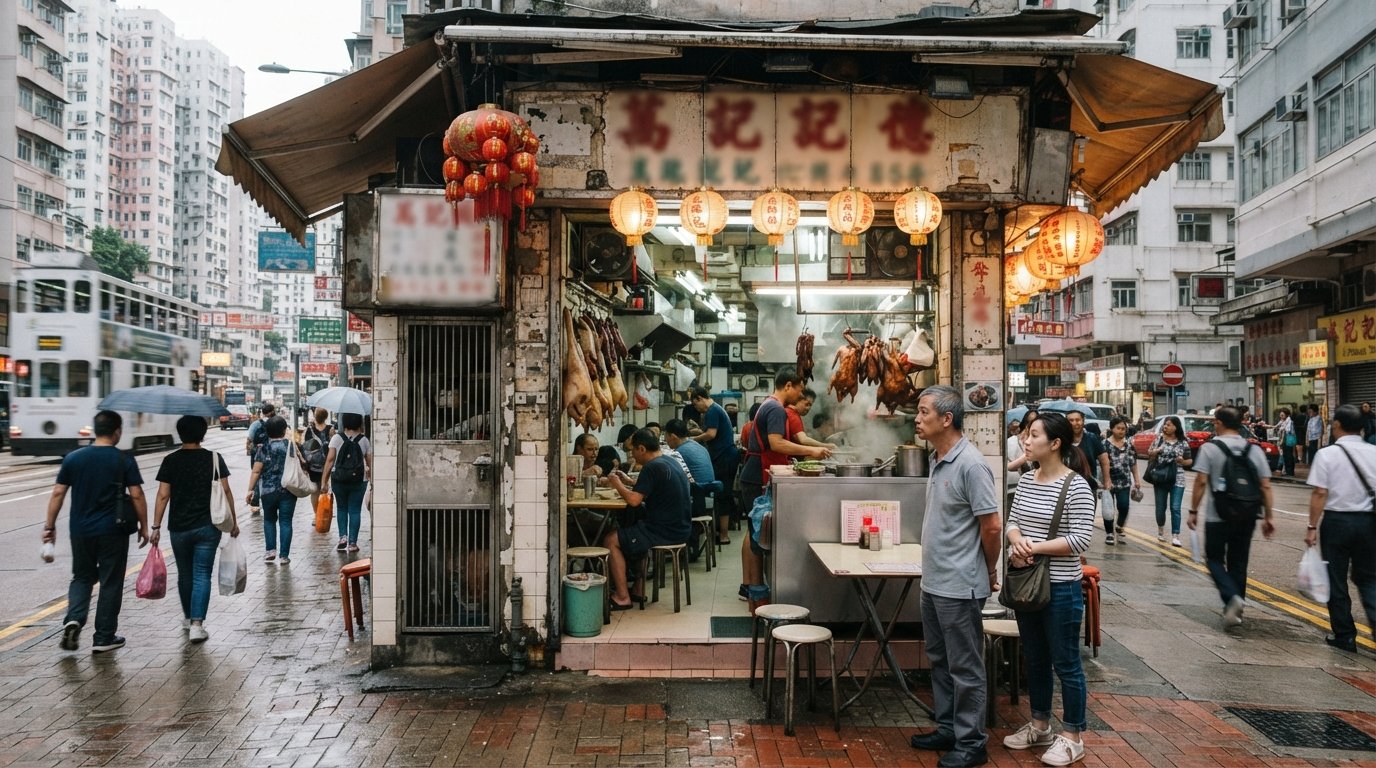
At the traditional end, Tak Kee on Belcher’s Street is the Chiu Chow heavyweight — a Michelin Bib Gourmand pick that grew from a 1990s street stall, famous for braised goose, oyster pancakes and pork-tripe-and-peppercorn soup. It is the kind of place that reminds you how much Hong Kong still runs on family memory and hot pots. No fuss, no theatre, just the right dishes done with enough conviction to keep a line outside the door.
Yuan is Here on North Street is the other Bib Gourmand name, a buzzy Taiwanese counter recreating Taipei night-market cooking with braised minced pork rice and double-egg oyster omelette, ingredients shipped from the chef’s hometown. It has the energy of a place where the room is doing half the talking for you. The food is direct, comforting and a little addictive — the sort of bowl that disappears before you remember to slow down.
For old-school Cantonese, Sun Hing near Smithfield Road opens in the small hours, roughly 3am to 4pm, and hands you fresh custard buns straight from the steamer. That alone is worth the detour. There is something properly bracing about a bun so hot it clouds your glasses before breakfast has even become a thought. Sheung Hei on North Street does charcoal-fired claypot rice worth the queue; if you want the neighbourhood at its most local and patient, stand with the others and wait for the lid to come off.
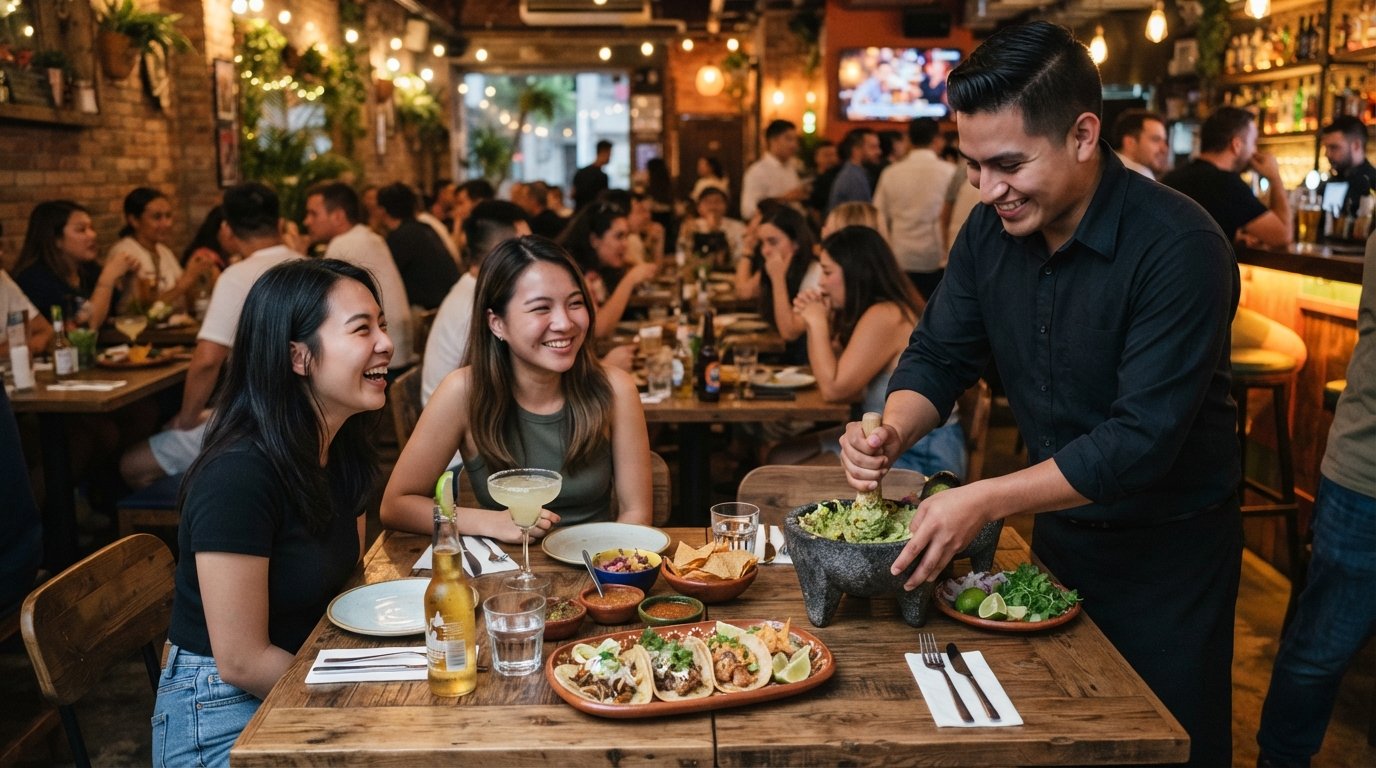
The international side is just as deep. Pici on Cadogan Street is the neighbourhood pasta bar — fresh pasta daily, a beloved tiramisu, and reliably great value. It is not trying to be precious, and that is why it works. 11 Westside on Davis Street brings serious tacos and tableside guacamole from chef Esdras Ochoa, and the place has the confidence of a room that knows exactly what it is good at. Comptoir on Forbes Street pairs a buzzy French bistro downstairs with a 600-bottle wine cellar above, while Enso on New Praya grills yakitori a few steps from the water. That last one is a lovely K-Town move: dinner close enough to the harbour that the salt air gets involved.
For coffee, % Arabica occupies a two-storey corner at Davis Street and the praya with harbour views, and that setting does half the work. Little Cove Espresso does airy all-day brunch on New Praya, the kind of place where the morning stretches out without apology. Winstons Coffee pours Aussie-style flat whites by day and espresso martinis after dark, which is about as Kennedy Town as it gets: one counter, two moods, no drama.
Going out
Set expectations correctly: K-Town is a sundowner neighbourhood, not a late one. The ritual is drinks facing the harbour as the light goes, and plenty of the daytime cafes shape-shift to fill it. That is the local tempo. People come out for a view, a glass and a conversation, not for a midnight sprint.
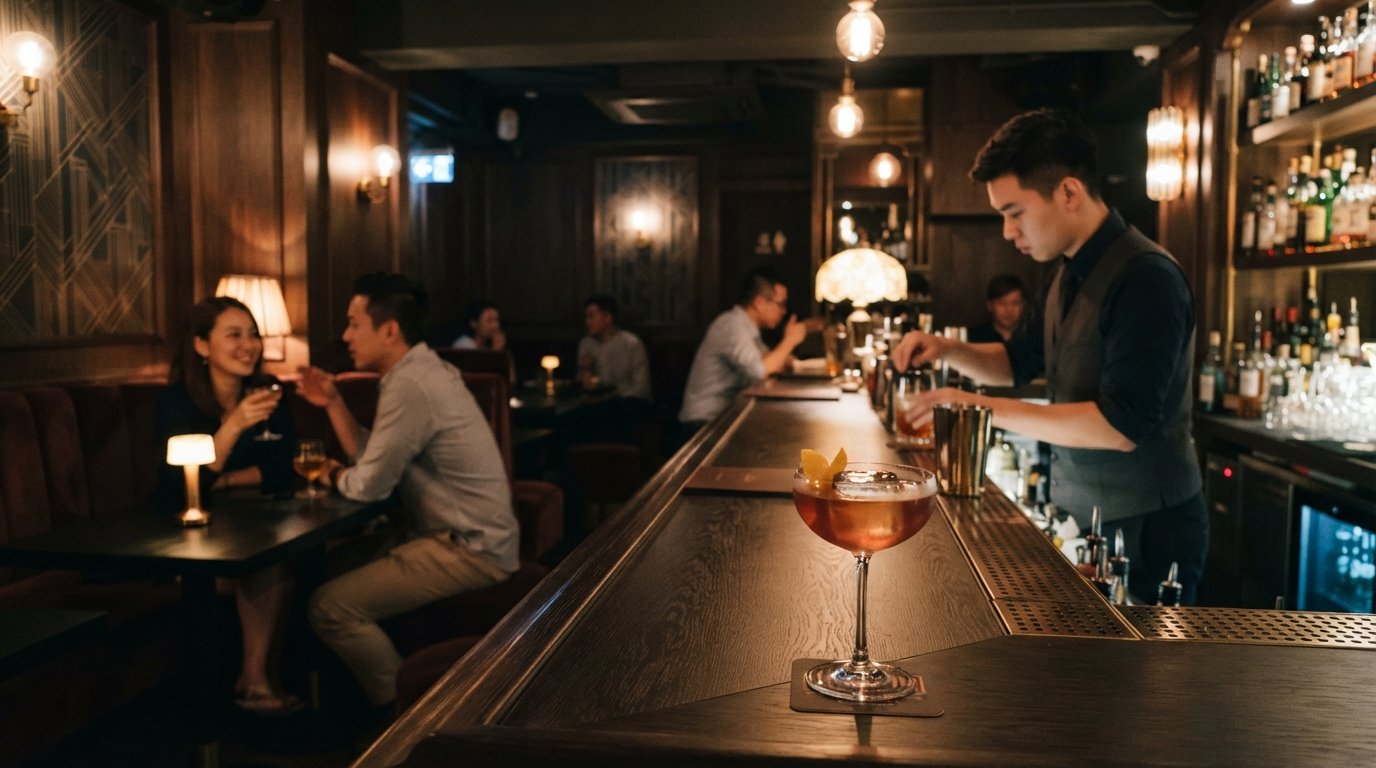
Winstons Coffee on Davis Street swaps flat whites for cocktails and espresso martinis after dark, and that flexibility tells you a lot about the area’s evening life. The strip of small bars and bottle shops around Catchick and New Praya keeps a low, sociable hum. Nothing here feels forced into nightlife for the sake of it. The neighbourhood’s cocktail highlight is The Wilshire Bar, a speakeasy-style room tucked inside 11 Westside on Davis Street, an LA art-deco nod built around a tight, creative list. It is a genuine destination bar rather than a passing-through pub, which is to say you go because you want a drink, not because you happened to be nearby.
Beyond that, expect wine bars over clubs, pints over bottle service, and a crowd that is out for conversation. If you want a big night, you will tram or MTR east to Sheung Wan and Central; if you want a cold beer, a sunset and an early night, you are already home. I mean that kindly. Not every neighbourhood needs to be loud to be alive.
Things to do / what to see
The signature activity is the sunset. Everything else in Kennedy Town feels like a prelude or an afterthought, and that is not an insult. It is the neighbourhood’s design.
The Belcher Bay Promenade on Shing Sai Road is the easy, family-friendly option — a boardwalk with picnic tables, a dog park and a full western view, a short walk from Kennedy Town station, Exit C. It is the place to bring no plan at all. Sit, watch, and let the harbour do its slow work.
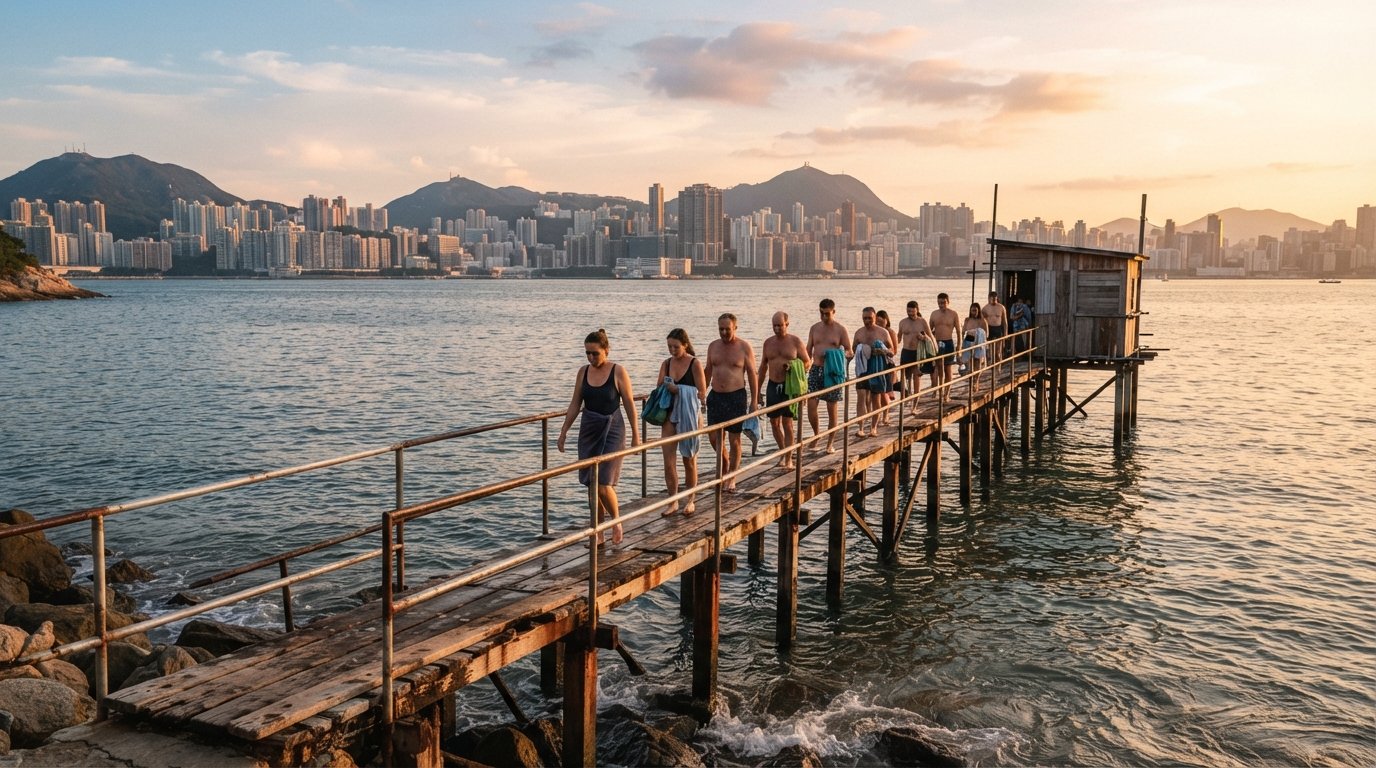
For the more atmospheric, Instagram-famous shot, walk about 12 to 15 minutes along Victoria Road to the Sai Wan Swimming Shed, a 1950s wooden changing pier that juts into the sea; get there early at golden hour, because a small queue forms on the narrow jetty. It is famous for a reason. The structure is simple, almost severe, and the sea around it does the rest. This is one of those Hong Kong scenes that looks edited even when it is not.
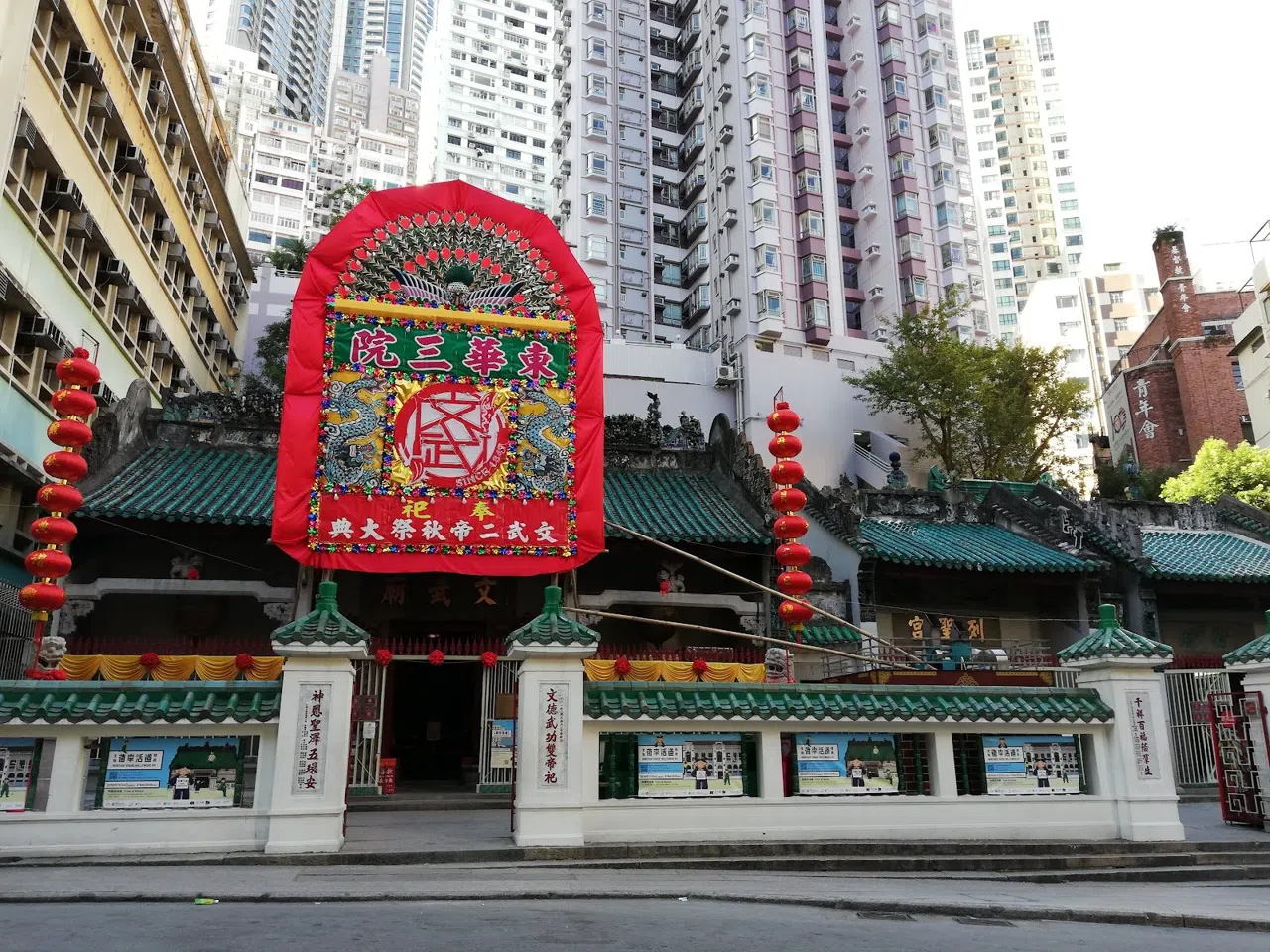
Working up the hill, Mount Davis rewards a climb with the concrete ruins of an early-1900s British coastal fort and long views back over the harbour. It is the neighbourhood’s counterweight to the waterfront: rougher, quieter, a little windswept. Down in the streets, Lo Pan Temple at 15 Ching Lin Terrace is a rare piece of heritage — the only Hong Kong temple dedicated to Lo Pan, the patron of carpenters and builders, dating to 1884 and declared a monument in 2024. That makes it not just old, but specific. Hong Kong can be very good at preserving a story when it chooses to.
And for a very local ride, the double-decker tram terminates here, so you can board an almost-empty ding-ding and rattle east through the old districts for a handful of dollars. It is the sort of trip that reminds you how the island still hangs together: one line, one bell, a long glide past the city’s changing faces.
Don’t miss in Kennedy Town
The New Praya waterfront, a popular spot for watching sunsets over the shipping lanes.
Belcher Bay Park, a harborfront green space with community gardens.
A high concentration of independent craft breweries and waterfront cafes.
Shopping & markets
Retail here is neighbourhood-scale, not mall-scale, and that is the charm. Slowood on Davis Street is the anchor for the area’s sustainable streak — a package-free organic grocer and lifestyle shop where you refill your own containers from bulk pantry staples. It is practical, but not sterile; the point is to make daily life feel a little more considered.
Around it, Davis, Catchick and Forbes streets string together independents: specialty coffee roasters selling beans to take home, small bottle shops and wine merchants, delis and butchers. For daily life, the wet-market energy still runs strong around Smithfield and Belcher’s Street, where old-school bakeries queue up locals for pineapple buns and egg tarts each morning, and the Smithfield cooked-food centre keeps traditional stalls upstairs. That morning queue matters. It is the neighbourhood insisting on itself before the day gets busy.
It is a place to browse on foot between coffees rather than to shop with intent — pick up beans, a bottle of wine and a pastry, and you have done Kennedy Town shopping properly. For a screen instead of a receipt, Golden Scene Cinema on Catchick Street is a four-screen independent house championing Hong Kong and arthouse film. That fits the area too: a neighbourhood that prefers texture to spectacle, and stories that do not shout.
Where to stay in Kennedy Town
Kennedy Town is a residential base, so accommodation skews toward serviced apartments and a handful of boutique stays rather than big international hotels — which is exactly why it suits travellers after a lived-in, local feel over lobby polish. Book near the waterfront, around New Praya, Davis Street and Catchick Street, if the sunset-and-brunch life is the draw; you will be steps from % Arabica, the promenade and the best of the cafes. Stay closer to the MTR station and Belcher’s Street for the quickest connections to Central and the older, more local grain of the neighbourhood.
Prices generally undercut Central and Causeway Bay for comparable space, and the trade-off — a little further from the marquee sights, a lot more calm and character — is the whole reason to choose K-Town. The area’s live hotels render directly below.
Hotels in Kennedy Town
Our best-rated stays in this neighbourhood. Prices are approximate “from” rates — confirmed at the provider when you continue. We may earn a commission if you book through our partners — at no extra cost to you.
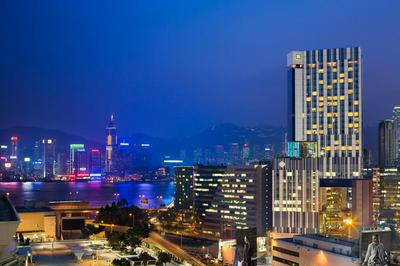
Nearby
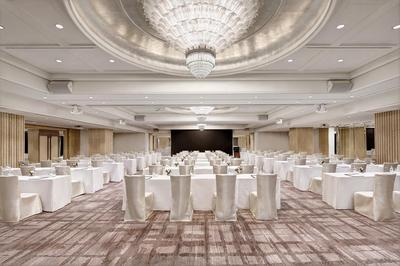
Nearby
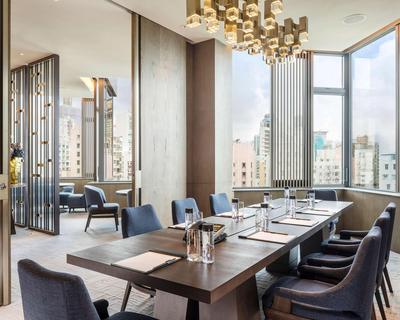
Nearby
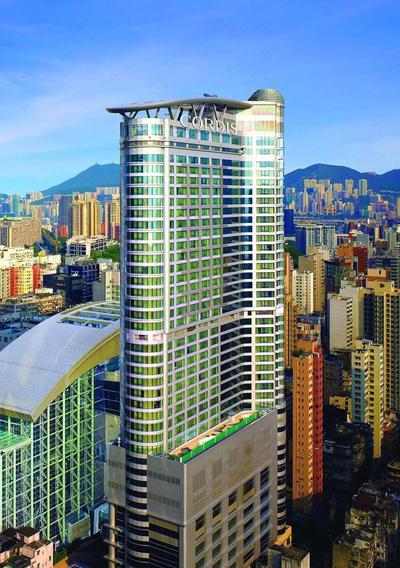
Hong Kong
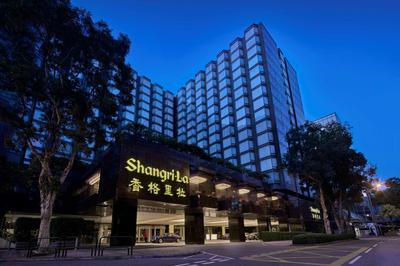
Cordis, Hong Kong - Langham Hospitality Group
8.9· 5,509 reviews
approx. from£387 / nightSee prices
Nearby
Nearby
Nearby
Nearby
Getting around
Kennedy Town Station is the western terminus of the MTR Island Line, so trains run frequently and you are never fighting for a connection. Central is only a few stops and roughly 10 minutes away; Causeway Bay and the rest of the north shore are a straight ride east with no changes. That is the practical magic here: the neighbourhood feels tucked away, but it is not cut off.
The neighbourhood itself is flat, compact and made for walking — most restaurants, cafes and the promenade are within a 5 to 10 minute stroll of the station exits, with Exit C for the waterfront and Exit B for Lo Pan Temple and the old streets. The double-decker tram also terminates here for a slower, scenic crawl along the north shore. For the airport, allow roughly 45 to 60 minutes: MTR to Hong Kong or Central station and change to the Airport Express, or take a taxi via the Western Harbour Crossing.
Kennedy Town is very safe, quiet and residential day and night; standard big-city common sense is enough. The best way to read it is not as a destination you conquer, but as a place you settle into for a day or two and let the city come to you. By late afternoon, with a drink in hand and the horizon turning gold, that is easy enough to do.
Gallery
Kennedy Town in pictures
Kennedy Town — your questions
Is Kennedy Town a good area to stay in Hong Kong?
Yes, if you want a real neighbourhood rather than a tourist base. It is calm, walkable, safe and strong on food and coffee, with Hong Kong’s best sunset access and a direct MTR link about 10 minutes from Central. You give up some big-hotel polish and immediate access to the marquee sights, but you gain local texture and a much softer pace.
How do I get from Kennedy Town to Central?
Take the MTR Island Line eastbound from Kennedy Town, the line’s western terminus. Central is only a few stops away, roughly a 10-minute ride with no changes and very frequent trains. If you want the scenic version, the double-decker tram also terminates in Kennedy Town and rattles east along the north shore for a handful of dollars.
Where’s the best place to watch the sunset in Kennedy Town?
Two spots stand out. Belcher Bay Promenade on Shing Sai Road is the easy, family-friendly choice, with a boardwalk, picnic tables, a dog park and a wide western view. For the more atmospheric photo, walk about 12 to 15 minutes to Sai Wan Swimming Shed, a 1950s wooden bathing pier over the sea; go early, because a small queue forms on the narrow jetty.
What is Kennedy Town best for?
Sunset drinks, slow brunch, waterfront walks and value-driven food. It is especially good for travellers who want a lived-in Hong Kong neighbourhood with easy MTR access, strong cafes and a food scene that ranges from Bib Gourmand classics to chef-led newcomers.