In this area
The Hong Kong issue
Mong Kok, Hong Kong: the city at full volume
A street-level feature on Hong Kong’s busiest corner, where neon, market stalls and noodle steam crowd every block.
By Carmen HoHong Kong, from the ground up
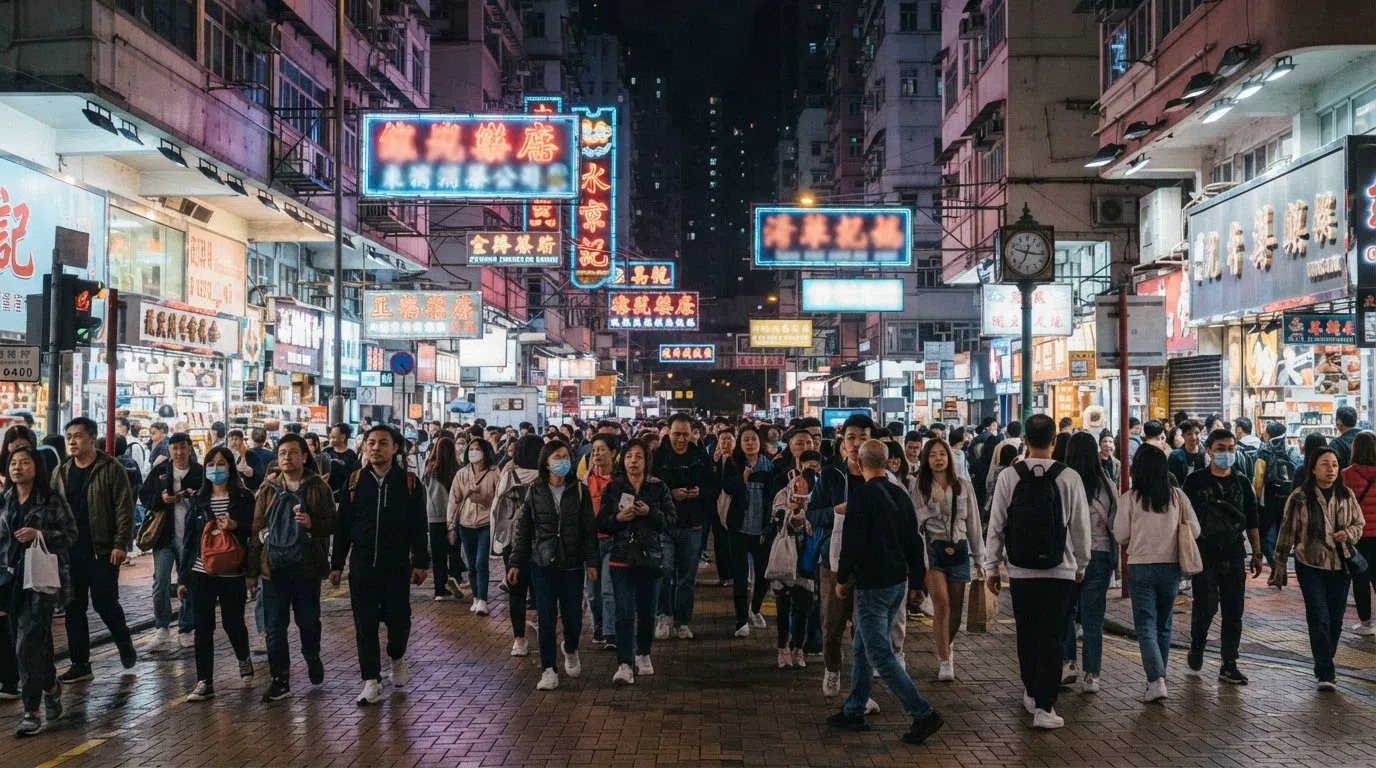
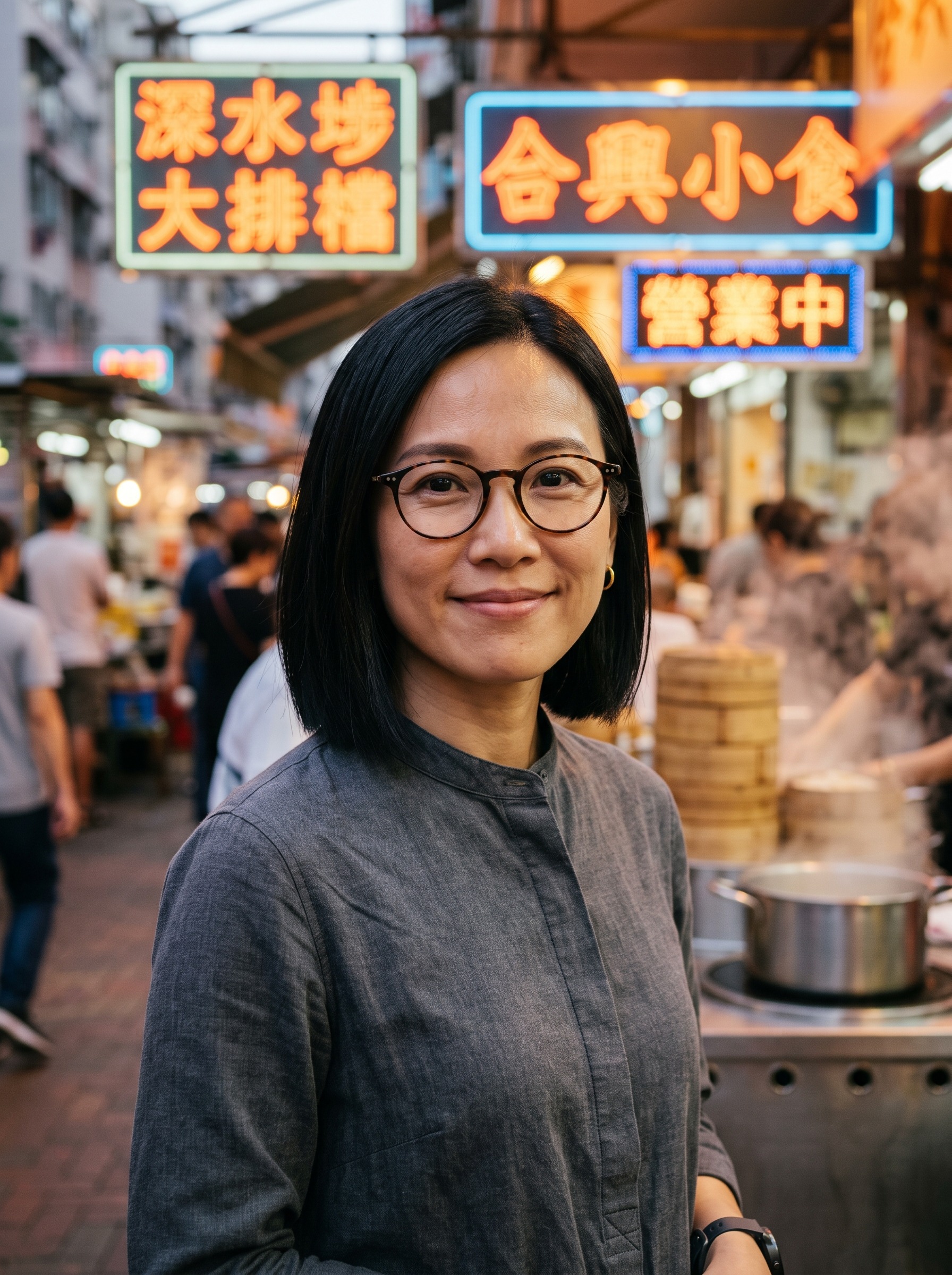
Mong Kok does not ease you in. At the Argyle Street and Nathan Road junction at 9pm, the district is already in motion: shoppers streaming through the crossing, curry-fish-ball steam lifting off a cart, cage-birds chirping two streets north, and signboards stacking so high they seem to press the sky down. This is the place whose Cantonese name loosely means “busy corner,” and it earns the name without trying. The streets are tight, the ground floors are mostly shops, and the upper floors are a vertical jumble of tutorial schools, mahjong parlours, guesthouses and shisha bars. It is grubby, cramped, occasionally chaotic and completely alive. If you want Hong Kong with the volume turned up, this is where you stand.
What Mong Kok is known for
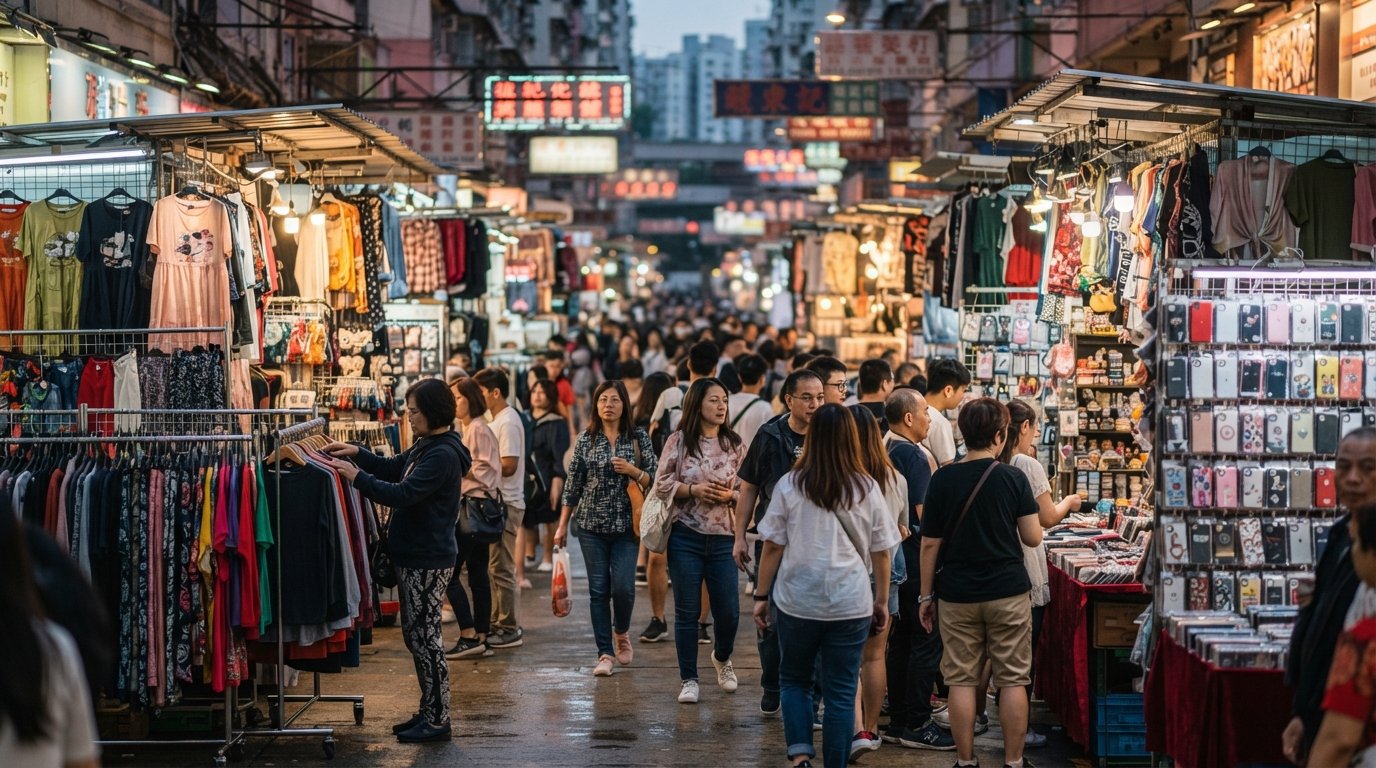
Mong Kok is built from themed streets, each one a little world, each one close enough to the next that you can cross from flowers to fish to sneakers without ever losing the rhythm of the crowd. The district’s most famous run is the Ladies’ Market along Tung Choi Street, a kilometre or so of clothing, phone cases, souvenirs and knock-off accessories, with more than 100 stalls squeezed into the strip. It is best from mid-afternoon to around 11pm, when the bargaining starts and the lane becomes a moving wall of hands, plastic hangers and quick glances at prices. This is not a place for reverence; it is a place for haggling, and for watching how Hong Kong shops when it is not performing for anyone.
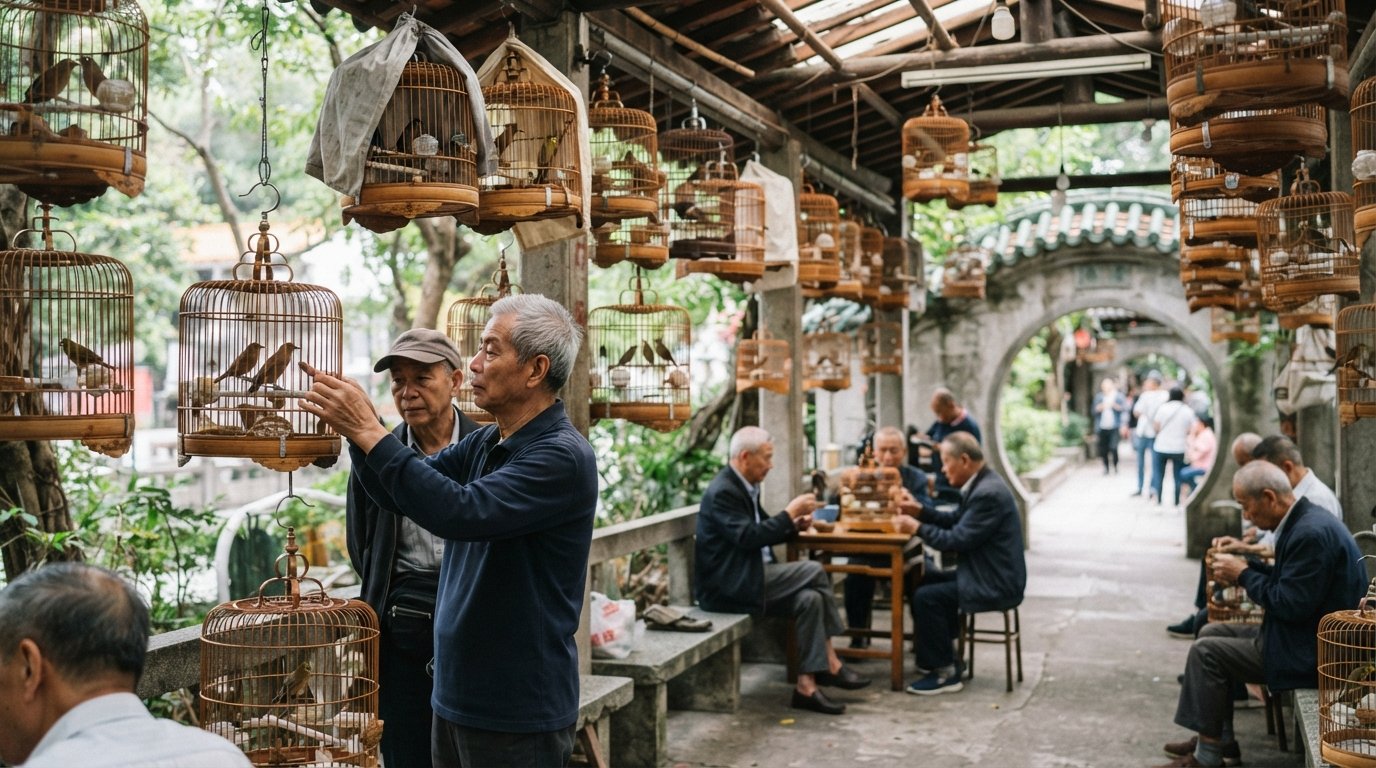
A block away, Fa Yuen Street changes the mood again. This is Sneaker Street, dozens of trainer and sportswear shops packed end to end, a magnet for students and anyone who likes the hunt of finding the right pair at the right price. Cross Mong Kok Road and Tung Choi Street turns into the Goldfish Market, where aquarium and pet shops put fish in water-filled bags right out on the shopfronts. It is one of those only-in-Hong-Kong spectacles that can feel comic until you realise how normal it is to the people who work here. Two streets further north, near Prince Edward, Flower Market Road smells like damp stems and cut leaves, especially in the morning and in the run-up to Lunar New Year, when the street turns manic with colour and last-minute buyers. At the eastern end sits the Yuen Po Street Bird Garden, where older men still bring their songbirds in bamboo cages, and the sound is as important as the sight.
This is why Mong Kok rewards walking. Not a single sight, but a sequence of them: market to market, street to street, each with its own rules and its own crowd. The district’s energy comes from the fact that all these micro-worlds sit within a few blocks of one another, and none of them feels like a tourist set. Cantonese is the ambient language. The soundtrack is car horns, phone-shop Cantopop, and the sizzle of woks from the ground floor. You do not come here to “do Mong Kok.” You come here to drift until your bag is full, your ears are ringing and you have a better sense of how the city breathes.
Plan your Hong Kong trip
Live prices from our booking partners.
Guests & rooms
Free cancellation on many rooms. We may earn a commission when you book.
Where to eat & drink
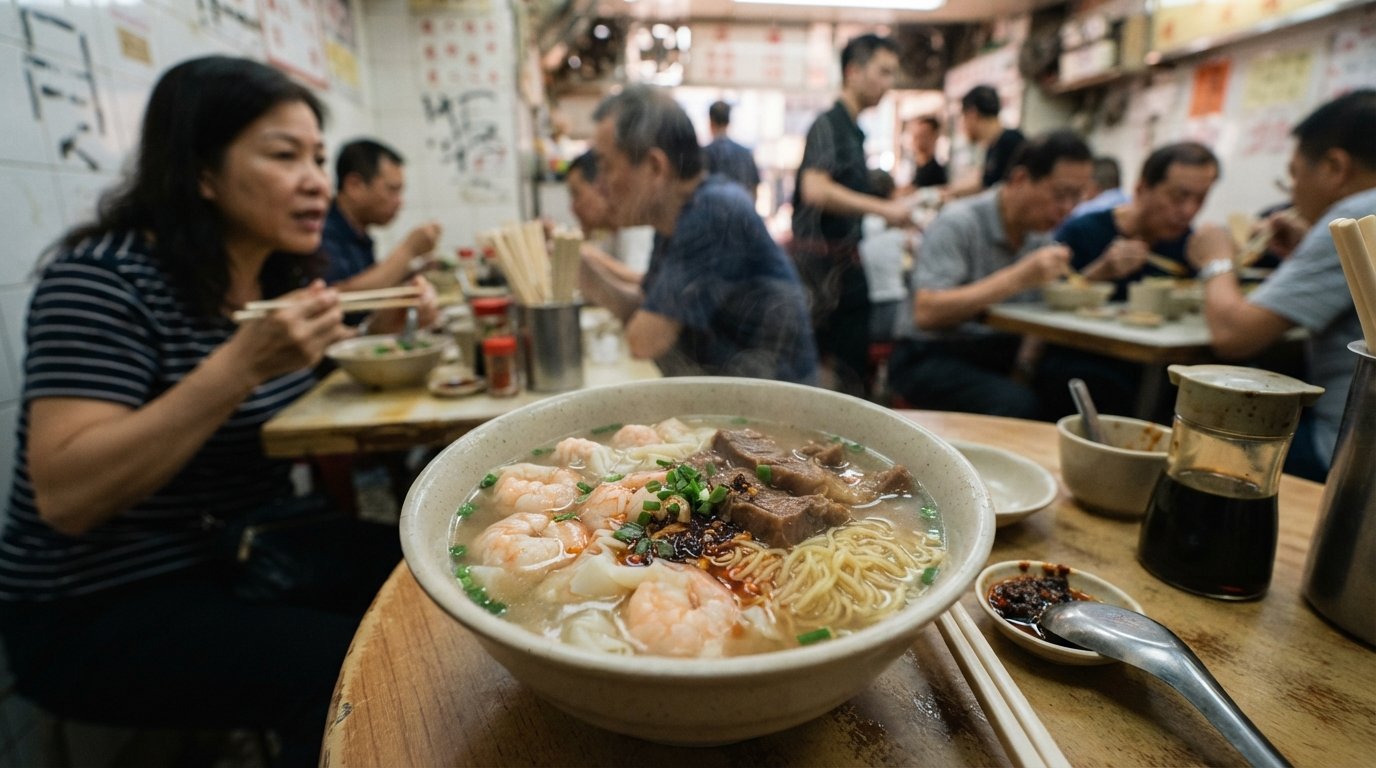
Mong Kok is grazing territory. The best way to eat here is to move from counter to counter, cart to cart, and let the district feed you in fragments. Start on Fa Yuen Street at Good Hope Noodle, a proper old workhorse that has been ladling shrimp-wonton and beef-brisket noodles since 1971 and carries a Michelin Bib Gourmand. The room is not precious; it is busy, efficient and built for turnover, with queues and shared tables as part of the deal. That is the point. The bowl arrives with the clarity you want in Hong Kong noodle soup: noodles with bite, broth with backbone, brisket that has spent enough time in the pot to know what it is doing.
If you want dim sum without the hotel markup, One Dim Sum near Prince Edward on Tung Choi Street is the name to know. It used to carry a Michelin star, and it still earns its reputation by keeping the food cheap and cheerful: har gow, char siu bao and rice rolls moving out at a pace that suits the neighbourhood. It is the kind of place that reminds you how much of Hong Kong’s eating culture is built on value without apology. No one comes here to admire the tablecloths. They come because the basket lands fast and the price does not make you wince.
Dessert is where Mong Kok gets sentimental. Kai Kai Dessert opened its Mong Kok branch on Fa Yuen Street in late 2024, bringing old-school tong sui back into the district with black-sesame paste, walnut soup and glutinous rice-ball sweet soups. It is a Bib Gourmand name, but the appeal is older than the label: warm bowls, soft sweetness, the sort of finish that makes sense after a day spent under neon and market tarpaulin.
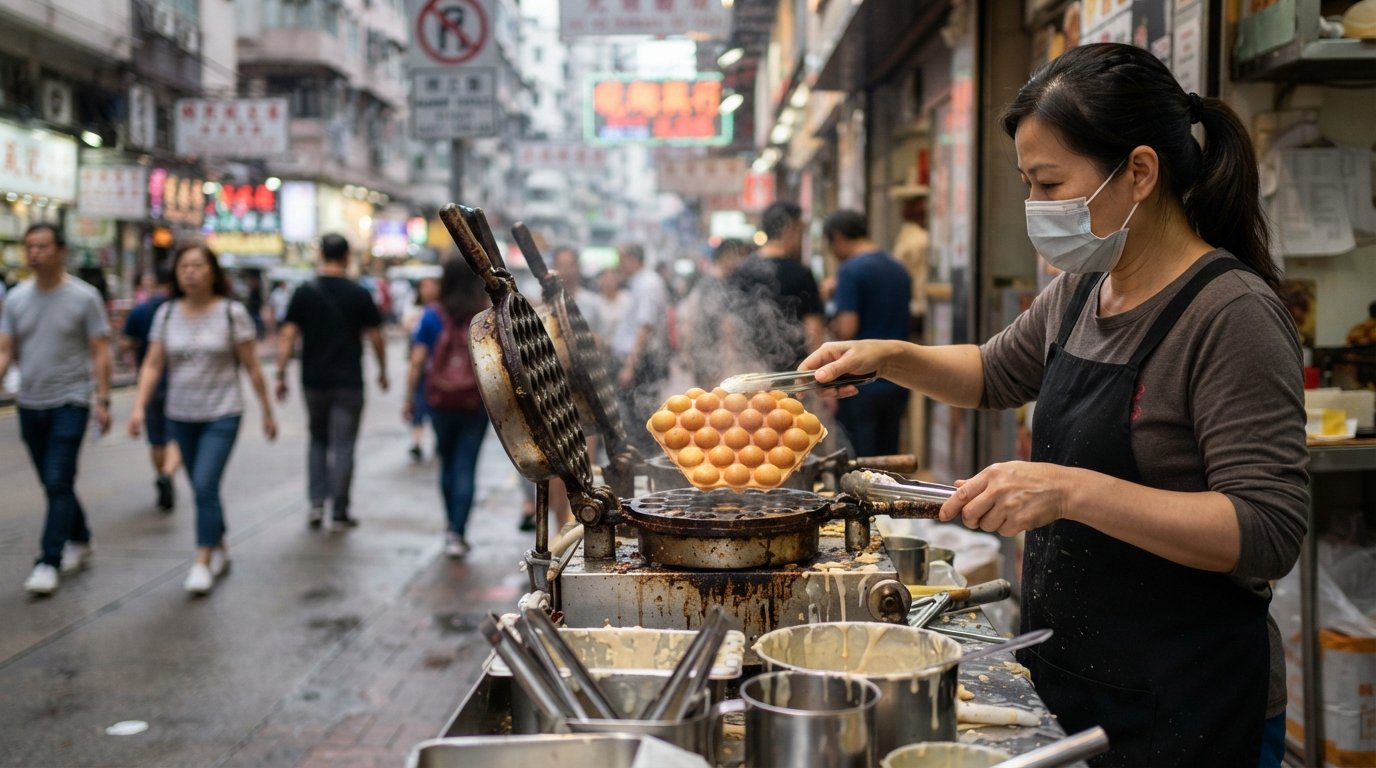
Street food does the loud, greasy work. At 43 Dundas Street, Mammy Pancake was one of the first street stalls the Michelin Guide ever recommended, and its bubble-shaped egg waffles, gai daan jai, can be plain or stuffed. Nearby, Fei Jie is a cult Dundas Street cart for braised pig intestines and mixed skewers doused in mustard and chilli. Add curry fish balls and stinky tofu from the carts around Sai Yeung Choi Street, and dinner is not a sit-down event but a route. That is Mong Kok at its best: you eat standing up, you eat while walking, and you eat with the crowd pressing past your elbow.
To drink, Hak Po Street gives the district a small but real craft-beer spine. TAP - The Ale Project was Kowloon’s first dedicated craft-beer bar, a Young Master project with a rotating tap wall and a Time Out listing, and it still feels like the low-key counterpoint to the district’s noise. A few doors away, Knockbox Coffee is one of the city’s specialty-coffee pioneers, the place for a morning flat white before the crowds build and the market streets fully wake up. Mong Kok does not pretend to be a cocktail neighbourhood. It is for beer, coffee, dessert soup and whatever you can carry in one hand while the other keeps your shopping bag from swinging into a scooter.
Going out
Mong Kok is not Lan Kwai Fong and it does not want to be. There is no bar-crawl theatre here, no tidy procession of terraces and high heels. The night is about the streets themselves: neon peaking after 8pm, markets running to 11pm, karaoke boxes, late-night dessert houses and noodle shops open past midnight. The district changes gear after dark, but it does not switch off. It simply gets brighter, louder and a little more theatrical.
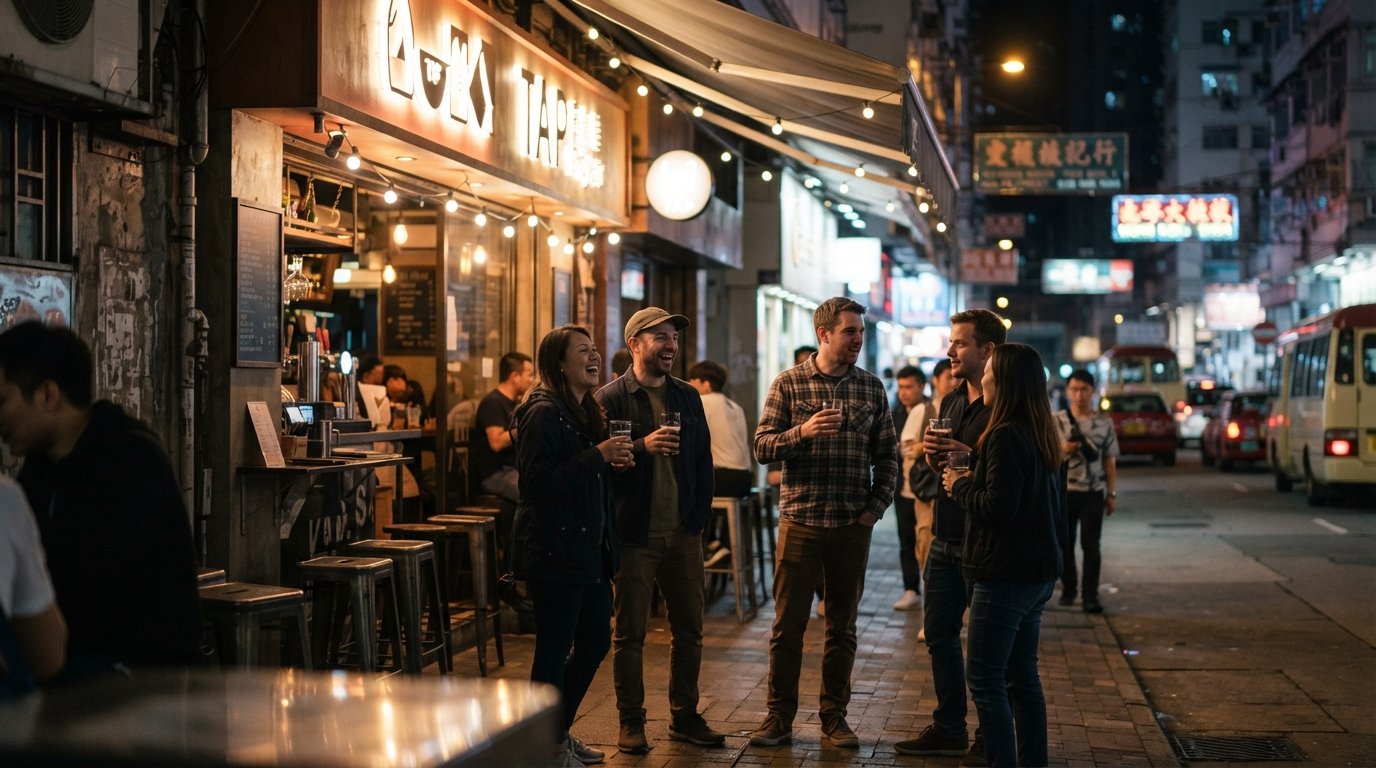
Hak Po Street is where the drinking scene clusters. TAP - The Ale Project anchors the strip, and the mood is all about staying local and unpretentious rather than chasing a scene. If you want something more polished, Cordis Hong Kong above Langham Place has the hotel bars, the two-Michelin-starred Ming Court and the Garage Bar, where craft beer comes with food-truck bites in a more relaxed setting. That is the other face of Mong Kok: not a nightlife district in the conventional sense, but a place where you can move from street food to a hotel bar without ever leaving the neighbourhood’s pulse behind.
What makes an evening here work is not the idea of going out, but the act of staying out. Eat an egg waffle on the move, sip beer on Hak Po Street, then wander back through the markets after the shops have shut and the crowd has thinned just enough to let you notice the signs overhead. The best Mong Kok nights are not built around one venue. They are built around the walk between them.
Things to do / what to see
The single best thing to do in Mong Kok is a self-guided market walk, and the route is simple enough to remember. Start at Prince Edward station, take Flower Market Road first while it is still lively in the morning, then continue to the Yuen Po Street Bird Garden at its eastern end. From there, head south down Tung Choi Street North through the Goldfish Market, keep going into the Ladies’ Market proper, and finish on Fa Yuen Street among the sneaker shops. It is maybe 30 minutes of walking if you do not stop, which you absolutely will not manage. That is the charm. Every block pulls you sideways.
The Bird Garden is one of the district’s softer notes, but it is not sentimental. The cages, the bamboo, the men who come to tend their songbirds — it is a living ritual, not a display. Flower Market Road has its own rhythm, especially before Lunar New Year, when the street becomes spectacular and a little frantic. The Goldfish Market is stranger and more specific, the kind of place that tells you a lot about Hong Kong by showing you how much people will specialise when they have the room to do it. And then there is the Ladies’ Market and Sneaker Street, both of them more obvious, more crowded, and still worth your time because they show Mong Kok at street level, doing what it has always done.
Beyond the market loop, Mong Kok is also a hub of Hong Kong subculture. Sino Centre on Nathan Road is a multi-floor warren of manga, anime figures, trading cards and retro games, with vinyl sellers, model shops and camera dealers nearby. It is one of those places that can swallow an afternoon if you let it, especially if you are the sort of person who likes to browse without a plan. The district rewards curiosity more than ticking boxes. The real attraction is not one building or one attraction card; it is the density of things happening at once.
Don’t miss in Mong Kok
The Ladies' Market on Tung Choi Street, famous for clothing, accessories, and souvenirs.
Sneaker Street (Fa Yuen Street), a dense concentration of athletic footwear shops.
Temple Street Night Market, located just south in Yau Ma Tei, known for open-air food stalls and fortune tellers.
Shopping & markets
Shopping is the whole point of Mong Kok, and the district understands retail as a layered thing. On the street, the Ladies’ Market is the obvious first stop for cheap clothing, souvenirs and gadgets, while Fa Yuen Street is where trainers and sportswear line the pavement in a way that makes Sneaker Street feel less like a nickname than a promise. The Flower Market and Goldfish Market are more specialised, more local, and in some ways more revealing. You may not buy a potted plant or a bagged fish, but you will remember that people do.
When the heat rises or the crowd gets too much, the vertical malls are there to catch you. Langham Place at 8 Argyle Street is the landmark: a corkscrewing tower of 200-plus shops connected straight to Mong Kok MTR, with an 83-metre Xpresscape escalator worth the ride on its own. T.O.P, or This is Our Place, by the station, and the older arcades along Sai Yeung Choi Street add fast fashion, Korean beauty and electronics to the mix. MOKO at Grand Century Place, above Mong Kok East station, is the calmer, family-friendly option if you want the air-con and a little more breathing room.
The trick in Mong Kok is not to choose between markets and malls. Treat them as one ecosystem. Haggle outside, retreat indoors when the humidity bites, then come back out when the neon starts to glow. That rhythm — open air, air-con, open air again — is the neighbourhood’s real shopping logic.
Where to stay in Mong Kok
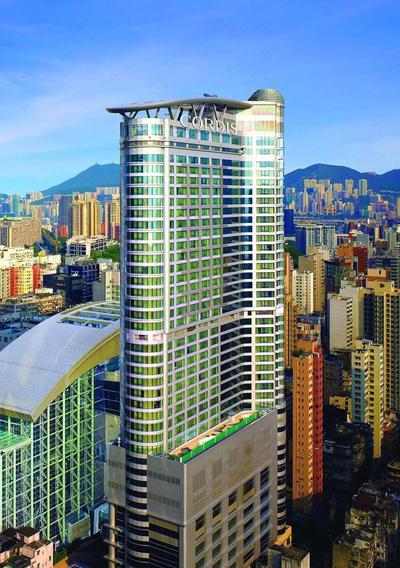
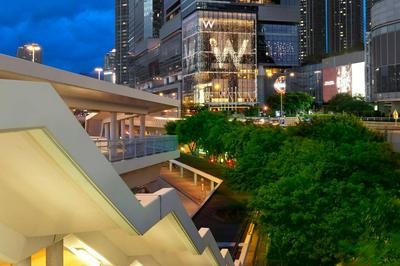
Mong Kok is one of Kowloon’s best-value bases because it puts you right on top of the action without asking you to pay harbour-view prices for the privilege. The standout is Cordis Hong Kong, the five-star hotel above Langham Place, wired directly into Mong Kok station and home to the two-Michelin-starred Ming Court. If you want a polished stay with the district under your feet, that is the obvious choice. Below that, the area is thick with reliable mid-range and business hotels within a few minutes’ walk of the markets, plus cheaper guesthouses for travellers who only need a bed between market runs.
What you trade for location is quiet. Rooms facing Nathan Road, Argyle Street or Sai Yeung Choi Street can be noisy late into the night, and this is not the place for anyone who wants space, calm or a harbour view. Ask for a higher floor or a side street if you sleep lightly. Mong Kok is a good base because it is honest about what it is: busy, connected, affordable and never far from food.
Hotels in Mong Kok
Our best-rated stays in this neighbourhood. Prices are approximate “from” rates — confirmed at the provider when you continue. We may earn a commission if you book through our partners — at no extra cost to you.
In this area
Mong Kok
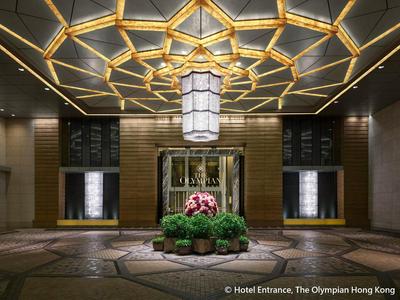
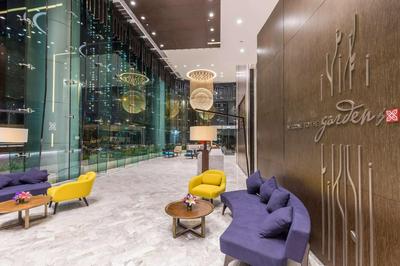
Cordis, Hong Kong - Langham Hospitality Group
8.9· 5,509 reviews
approx. from£344 / nightSee prices
In this area
In this area
In this area
In this area
In this area
In this area
In this area
Getting around
Mong Kok is compact and best explored on foot, but it is also one of Kowloon’s transport crossroads. Mong Kok station sits on both the Tsuen Wan line and the Kwun Tong line, which makes line changes painless without leaving the district. From here, the Tsuen Wan line runs south to Tsim Sha Tsui in a couple of stops and on to Central under the harbour in around 15 to 20 minutes. Prince Edward, one stop north, is the closer exit for the Flower, Bird and Goldfish markets, while Mong Kok East on the East Rail line serves MOKO and the Grand Century complex and trains toward the New Territories and the border.
There is no direct Airport Express here, so the simplest route to Hong Kong International Airport is MTR to Central or Hong Kong station, then the Airport Express, which takes about 24 minutes from Central. Door to door, you are looking at roughly 45 to 60 minutes. Get an Octopus card and use it for everything. Then prepare for the fact that, at street level, the crowds may slow you down more than the trains ever will.
Gallery
Mong Kok in pictures
Mong Kok — your questions
Is Mong Kok a good area to stay in Hong Kong?
Yes, if you want a lively, well-connected and affordable Kowloon base and you do not mind noise. It has excellent MTR links, cheap food everywhere and the city’s best market shopping on your doorstep, with hotels ranging from the five-star Cordis to budget guesthouses. It is not the place for calm, space or a harbour view, and rooms on the main streets can be loud late into the night.
Is Mong Kok safe for tourists?
Broadly, yes. Like the rest of Hong Kong, it is very safe by day and into the evening, with heavy crowds and constant activity. The main thing to watch is petty theft in the market crush, so keep an eye on your bag and phone and haggle firmly. After about 2am, when the crowds thin out, use normal big-city caution.
What is Mong Kok famous for?
Its extreme density and its themed street markets: the Ladies’ Market for bargains, Fa Yuen Street or Sneaker Street for trainers, the Goldfish Market, the Flower Market and the Yuen Po Street Bird Garden. It is also a street-food stronghold, with egg waffles, curry fish balls, wonton noodles and cheap dim sum, plus a neon-lit local youth culture of manga shops and phone stalls.
What should I eat first in Mong Kok?
Start with the classics: shrimp-wonton or beef-brisket noodles at Good Hope Noodle on Fa Yuen Street, dim sum at One Dim Sum near Prince Edward, and an egg waffle from Mammy Pancake on Dundas Street. If you have room, finish with tong sui at Kai Kai Dessert.